
If your cartons will be stored in stacks, loaded into export shipments, or handled through more than one warehouse, choose them from the load and handling conditions outward. Start with the packed product, the way cartons will be stacked, the expected handling points, and the closure method. Then ask the supplier to confirm the carton construction and inspection plan against those conditions before you approve a quotation.

This approach keeps a shipping carton purchase tied to a real operating case. It also prevents a common RFQ problem: comparing carton prices before every supplier is quoting the same use case.
What should you define before requesting a shipping carton quote?
Prepare a short carton brief before contacting suppliers. Include the following fields:
- Product name and a plain description of what will be packed
- Packed product length, width, height, and weight
- Whether the carton will hold one item, a set, or mixed items
- How cartons will be stored and stacked in your warehouse
- Whether cartons will be palletized, hand-carried, or moved by equipment
- Expected shipping route and the points where cartons will be opened or reclosed
- Closure method and the packing tape or other sealing material you plan to use
- Whether you need a standard carton or a custom carton program
This information gives a supplier a usable starting point. If one of these fields is unknown, mark it as a question for confirmation rather than filling it with an assumption.
For a broader RFQ structure, see How to Specify Shipping Carton Dimensions for a B2B RFQ. That page covers the dimensional information to collect; this guide focuses on the stacking and handling decisions that should follow it.
How does warehouse stacking change carton selection?
Warehouse stacking creates a different buying question from single-parcel shipping. A carton may spend time under other cartons, beside pallets, or in a mixed-SKU area. Your brief should therefore describe the planned arrangement instead of saying only “heavy duty.”
Ask your supplier to review:
- Stack pattern: Will cartons be aligned in columns, interlocked, or placed in a mixed pattern?
- Stack duration: Will the cartons be moved quickly, or held in storage for a defined period?
- Load position: Will the product sit evenly inside the carton, or can the weight move toward one side?
- Warehouse conditions: Is the storage area dry, humid, temperature-controlled, or exposed during loading?
- Handling frequency: How often will workers or equipment move the carton before dispatch?
The answers do not replace a supplier evaluation or a pre-production test. They make the evaluation specific enough for a supplier to recommend a construction and confirm what should be tested.

Should you choose single-wall or double-wall construction?
Wall construction should follow the packed product, the stacking plan, and the handling environment. A simple comparison helps your purchasing team ask the right follow-up questions without assuming that one construction is correct for every shipment.
| Buying situation | What to clarify with the supplier | Procurement consequence |
|---|---|---|
| Light product with short internal handling | Product weight, carton size, and planned stack duration | A simpler construction may be considered, subject to supplier review |
| Heavier product or longer warehouse storage | How the load will be distributed and what construction is proposed | Request a construction recommendation tied to the actual packed load |
| Mixed-SKU pallet or uneven internal loading | Void space, internal movement, and pallet arrangement | Confirm whether inserts, fit changes, or a different carton construction are needed |
| Export program with several handling points | Route, warehouse conditions, closure method, and inspection plan | Compare suppliers on process control and confirmation detail, not price alone |
RX Packaging lists Shipping Carton as a product category and also presents Recyclable Carton Shipping Moving Boxes as a product page. Use those pages to identify the relevant carton conversation, then send the supplier the load and handling details above for confirmation.
What should you inspect before approving a carton sample?
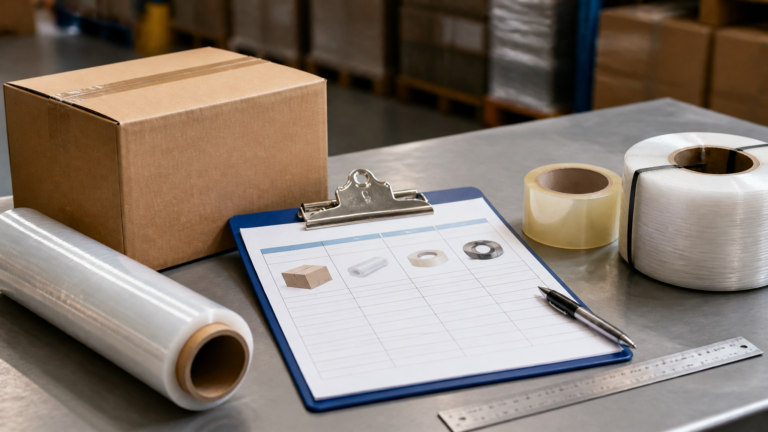
A sample review should answer operational questions, not only visual questions. Use a written checklist so that purchasing, warehouse, and quality teams inspect the same points.
Check the carton dimensions against the packed product
Place the actual product or a representative pack inside the sample. Check whether the carton leaves unnecessary movement space or creates pressure at the closure area. Record the dimensions used in the sample review so the approved sample can be compared with future production.

Check the wall and edge condition
Inspect the visible board surfaces, folds, corners, and closure flaps. Note any crushing, open edges, uneven folds, or damage after the sample is handled. If the carton will be stacked, photograph the sample before and after the planned handling sequence and keep the notes with the RFQ.

Check the closure method
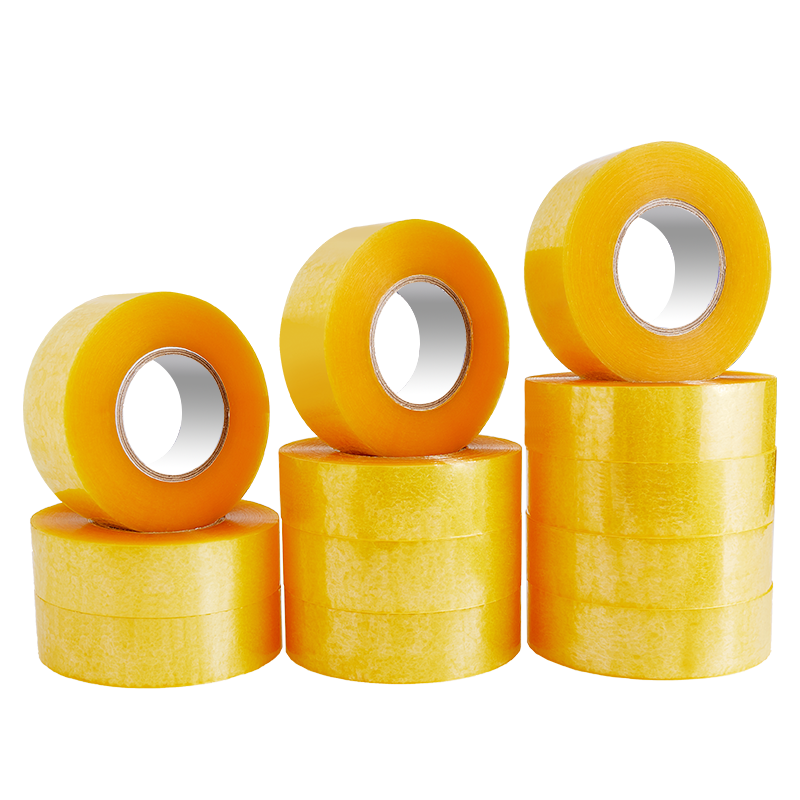
A carton is a system that includes the box, its contents, and its closure. Apply the planned sealing method to the sample and record the tape type, application method, and surface condition. RX Packaging also lists High Resistance Polypropylene Packaging Tape in its product pages, which can help buyers keep the carton and sealing-material discussion in one supplier conversation when appropriate.

Which supplier questions should be in your purchase order review?
Before approval, ask for clear answers to the following questions:
- What carton construction is being quoted, and why does it fit the packed product and stacking plan?
- Which carton dimensions are internal dimensions and which are external dimensions?
- What information must be confirmed before the supplier makes a production sample?
- How will the supplier check dimensions and visible carton condition during production?
- Which changes require a new sample or written approval?
- How should the cartons be stored before use?
- Which closure material and application method should your warehouse use?
- What should your team record if cartons arrive damaged or do not match the approved sample?
These questions keep the purchase record usable after the first shipment. They also expose missing information while the supplier can still adjust the quotation or sample plan.
How can a Foshan packaging manufacturer support the review?
RX Packaging describes itself as a packaging consumables manufacturer in Foshan, China, established in 2007. Its site presents SGS certification and product categories covering shipping cartons, sealing tape, stretch film, and strapping band. For this carton guide, confirm carton-specific inspection details with the supplier rather than assuming that every site quality statement applies to every product line.
For a carton project, give the supplier a complete brief rather than requesting a generic “export box.” Ask RX Packaging to confirm the proposed carton construction, dimensions, closure approach, and inspection points for your specific packed product. You can send the brief through the Contact Us page.
What should you confirm before placing the order?
Use this final decision list before you release the purchase order:
- The product and packed dimensions are written down.
- The stacking arrangement and storage conditions are described.
- The carton construction is named in the quotation or sample record.
- The closure method is agreed, including the sealing material to be used.
- A representative sample has been reviewed by the relevant teams.
- The inspection points and approval changes are recorded.
- The supplier knows which details are fixed and which still need confirmation.
If a required detail is missing, pause the approval and ask the supplier to confirm it in writing. A clear question at the RFQ stage is easier to resolve than a carton mismatch after production.
Shipping carton stacking requirements FAQ
What are shipping carton stacking requirements?
They are the load, arrangement, storage, handling, and closure conditions that a supplier needs to review before recommending a carton construction for your shipment.
What information should I send with a carton RFQ?
Send the packed product dimensions and weight, carton contents, stacking arrangement, storage conditions, handling method, shipping route, closure method, and any details that remain unknown.
Is double-wall always the right choice for stacked cartons?
No single construction should be approved from the label alone. Ask the supplier to relate the proposed construction to the packed product, stack duration, internal load distribution, and handling conditions.
Should carton dimensions be internal or external?
State which measurement you are providing and ask the supplier to identify the dimension type in the quotation and sample record. This avoids comparing different measurement conventions.
How do I check a carton sample before purchase?
Use the actual product or a representative pack, check fit and movement, inspect folds and edges, apply the planned closure method, document the handling sequence, and record any changes needed before approval.
Can the carton supplier also provide sealing tape?
Ask the supplier whether the carton and sealing-material requirements can be reviewed together. RX Packaging lists shipping cartons and polypropylene packaging tape among its site products, but the correct combination still depends on your packed product and operation.
Need a carton review before your next RFQ?
Prepare the product, stacking, storage, and closure details first. Then send them to RX Packaging for a supplier-side review of the proposed shipping carton and the information still needed for approval.