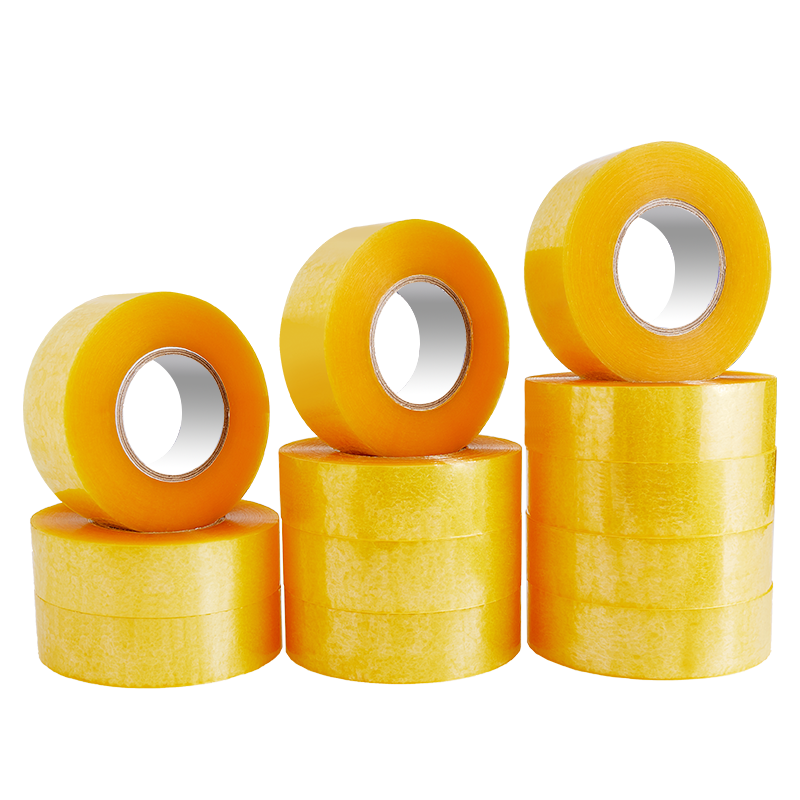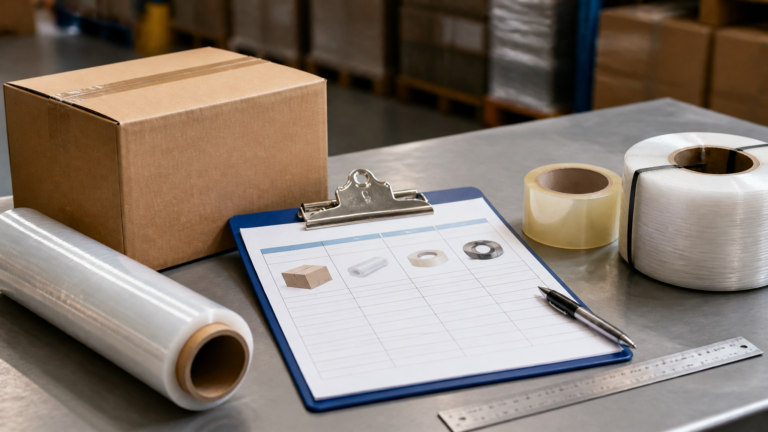
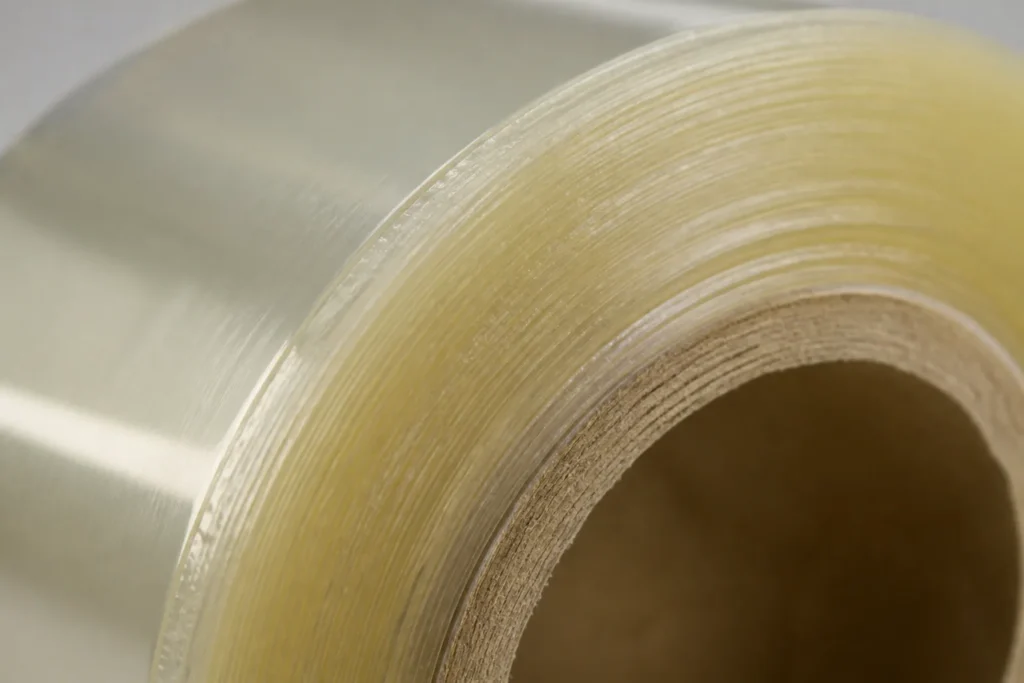
How to choose BOPP tape thickness? It starts with the weight and distance your carton actually travels, not a generic “strong tape” label. Thickness is measured in microns, and a few microns change how the tape performs on seams, over gaps, and in cold or rough handling. This guide helps buyers decide which micron band fits their cartons, what evidence a supplier should provide, and where thicker tape is money wasted.
1. What is BOPP tape thickness?
BOPP tape thickness is the film gauge of the polypropylene backing, expressed in microns. It is separate from adhesive coat weight, though the two work together. A 48-micron tape with heavy adhesive can outperform a 60-micron tape with light adhesive, so a buyer should read thickness and coat weight together rather than a single number.
Start with the load: weigh your heaviest filled carton and note whether it ships alone or stacked.
Match the two figures to the carton weight before comparing prices across suppliers.
| Factor | What it changes | Buyer question |
|---|---|---|
| Film gauge | Tear and split resistance | Does it hold the seam under load? |
| Adhesive weight | Initial tack and long hold | Does it stick on recycled board? |
| Total thickness | Handling and unwind | Does it run on the taping machine? |
| Orientation | Strength direction | Is it BOPP or cast? |
2. How does BOPP tape thickness differ from adhesive strength?
Thickness measures the film; adhesive strength measures the glue. A buyer can have a thin film with strong glue or a thick film with weak glue. The combination, not either figure alone, predicts whether a seal holds through a courier journey.
The film resists splitting and burst; the adhesive resists peeling and lifting. A carton seal needs both.
Test the full tape on your own carton stock, not on a steel panel, to see the real result.
| Property | What fails | Consequence |
|---|---|---|
| Thin film | Splits on heavy seams | Seal opens in transit |
| Light adhesive | Lifts on recycled board | Flap pops open |
| Thick + heavy | Over-spec cost | Higher per-carton cost |
| Balanced | Both hold | Reliable seal |
3. Where does thickness matter most in shipping?
Thickness matters most on heavy cartons, long-distance freight, cold storage, and any carton that gets stacked or dropped. Light documents and inner packs rarely need heavy tape. Matching thickness to the route avoids both split seals and wasted film.
Identify the worst condition a carton will face, then size the tape to that.
Choose the thickness for the harshest leg of the journey, not the average one.
| Condition | Film demand | Risk if too thin |
|---|---|---|
| Stacked pallet | High burst resistance | Seams split |
| Freezer | Flexible film | Tape goes brittle |
| Long transit | Durable hold | Seal lifts over days |
| Light parcel | Low demand | Over-spec cost |
4. Which micron range suits common carton weights?
Common packaging uses 48 to 70 microns. Light parcels and inner boxes suit 48-50, standard e-commerce cartons suit 52-55, and heavy or export freight suits 60 and above. The exact range depends on carton board and fill, so use weight as a starting point, not a rule.
Match the band to the filled weight, then confirm with a sample.
Confirm the band with a drop test on a real filled carton before bulk ordering.
| Carton weight | Suggested gauge | Reason |
|---|---|---|
| Under 10 kg | 48-50 micron | Light stress |
| 10-25 kg | 52-55 micron | Standard stress |
| 25 kg+ | 60+ micron | Heavy burst |
| Cold/export | One step up | Harsh conditions |
5. How should a buyer choose BOPP tape thickness?
Choose by testing the tape on the buyer’s own filled carton, not by comparing data sheets alone. Request the film gauge, adhesive coat weight, and a sample roll, then run a drop and a shelf-life test. The sample on real board tells more than any brochure figure.
Ask for the two numbers and one sample, then test on your stock.
RX Packaging supplies BOPP tape from Foshan, made since 2007 under SGS-certified production with virgin PP film. Buyers can request a sample matched to their carton weight.
| Step | What to do | What it reveals |
|---|---|---|
| Request | Gauge and coat weight | Real spec, not label |
| Sample | One roll of chosen band | Handling feel |
| Drop test | Filled carton | Split and lift risk |
| Hold test | Seal after 24 h | Long-term bond |
6. What should buyers check for quality?
Buyers should check consistent gauge along the roll, even adhesive coating, clean unwinding, and no edge voids. A roll that varies in thickness unwinds unevenly and seals inconsistently. Inspect the tape for stretch, curling, and adhesive transfer.
Check the roll end to end, not just the first meter.
A dependable supplier controls these across the whole roll, not just the start.
| Check | What to look for | Why it matters |
|---|---|---|
| Gauge | Consistent thickness | Even sealing |
| Coating | No bare patches | Reliable tack |
| Unwind | Smooth release | Machine speed |
| Edge | Clean, no voids | Fewer splits |
7. How can thickness affect taping machines?
Thickness affects machine tension, blade wear, and unwind speed. A tape that varies in gauge jams or tears at the dispenser. Automated lines want a consistent gauge and a reliable unwind, so buyers running machines should specify a tighter tolerance.
Confirm the tape runs on your machine before committing to bulk.
Ask the supplier for machine-compatibility details if you run automated taping.
| Machine factor | Thickness effect | Check |
|---|---|---|
| Tension | Higher gauge needs more | Test the setting |
| Blade wear | Thicker film dulls faster | Monitor life |
| Unwind | Uneven gauge jams | Run a full roll |
| Speed | Smooth release needed | Trial on line |
8. How does thickness affect cost per carton?
Thickness raises film cost directly, so heavier tape costs more per roll and per carton. The real cost is the sealed carton, not the roll: a thin tape that splits and needs a rewrap costs more in labour and returns than a slightly thicker tape that holds. Compare cost per sealed carton, not per roll.
Calculate total cost over the whole shipment, not the sticker price.
Choose the thinnest tape that reliably holds, not the cheapest tape that might not.
| Cost view | What it includes | Insight |
|---|---|---|
| Per roll | Film and adhesive | Lower gauge is cheaper |
| Per carton | Tape used per seal | Usage varies by width |
| Per shipment | Rewraps and returns | Thin tape can cost more |
| Total | Labour and claims | Reliability wins |
9. Should buyers choose thicker tape as a safety margin?
Thicker tape adds a safety margin only when the failure is film splitting. If failures come from poor adhesive or a dirty board, thicker film will not help. A buyer should diagnose the failure mode before upgrading the gauge.
Identify whether seals split, lift, or tear at the edge, then respond.
Fix the actual failure mode instead of defaulting to heavier tape.
| Failure | Likely cause | Right response |
|---|---|---|
| Split film | Thin gauge | Step up micron |
| Lifted flap | Weak adhesive | More coat weight |
| Edge tear | Sharp handling | Edge protection |
| Dirty board | Dust or wax | Surface prep |
10. What should buyers request before ordering?
Buyers should request the film gauge, adhesive coat weight, a sample roll, and a test on their own carton before ordering. Confirm the micron band against the heaviest carton and the harshest route. Release bulk only after the sample seals and holds on real stock.
Request the two numbers, one sample, and one drop test.
For BOPP tape matched to your carton weight, contact RX Packaging for a sample and specification.
| Request | Why | Decision it supports |
|---|---|---|
| Film gauge | Real film spec | Micron band choice |
| Coat weight | Adhesive strength | Tack and hold |
| Sample roll | Handling and machine | Bulk approval |
| Drop test | Real seal result | Final go/no-go |
Q1. What micron BOPP tape is best for general packaging?
48 to 55 micron covers most general packaging. Light parcels suit 48-50, standard e-commerce cartons suit 52-55, and heavy freight needs 60 and above.
Q2. Is higher micron always stronger?
Not always. Higher micron adds film thickness, but a tape with thin film and heavy adhesive can out-hold a thick film with light adhesive. Read film gauge and coat weight together.
Q3. Does BOPP tape thickness affect the taping machine?
Yes. Thicker or uneven gauge changes machine tension, blade wear, and unwind. Automated lines want a consistent gauge and smooth release.
Q4. How do I test BOPP tape thickness quality?
Check gauge consistency along the roll, uniform adhesive, clean unwind, and no edge voids. Then run a drop test on a filled carton and check the seal after 24 hours.
Q5. What should I send a supplier for a BOPP tape quote?
Send your heaviest filled carton weight, the route and any cold storage, whether you run a taping machine, and your target micron band. Ask for film gauge, coat weight, and a sample roll.