Pre Stretched Stretch Film: When It Pays and When It Does Not
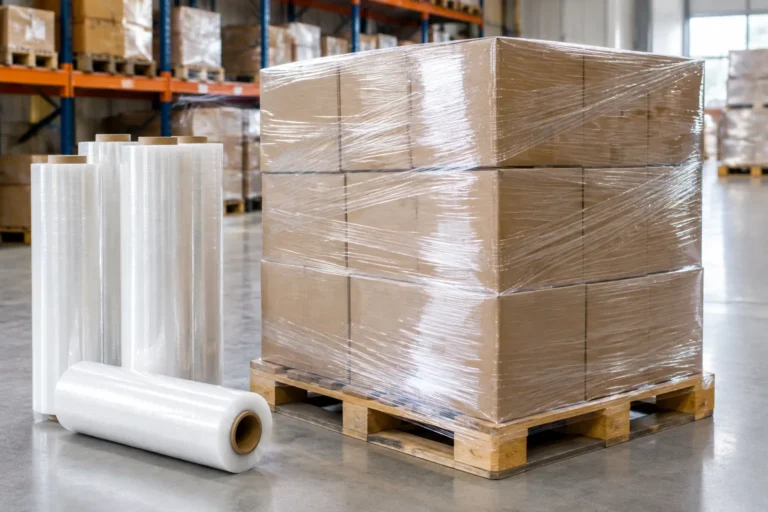
Pre stretched stretch film is film elongated at the factory before winding, so the roll arrives partly stretched and the user applies only modest extra tension. The benefit is controlled, repeatable stretch without a powered pre-stretch unit, which suits hand-wrap docks and older machines. The trade-off is paying for resin already converted into length. This guide helps buyers decide whether pre stretched film suits their operation, loads and budget.
1. What is pre stretched stretch film and how is it made?
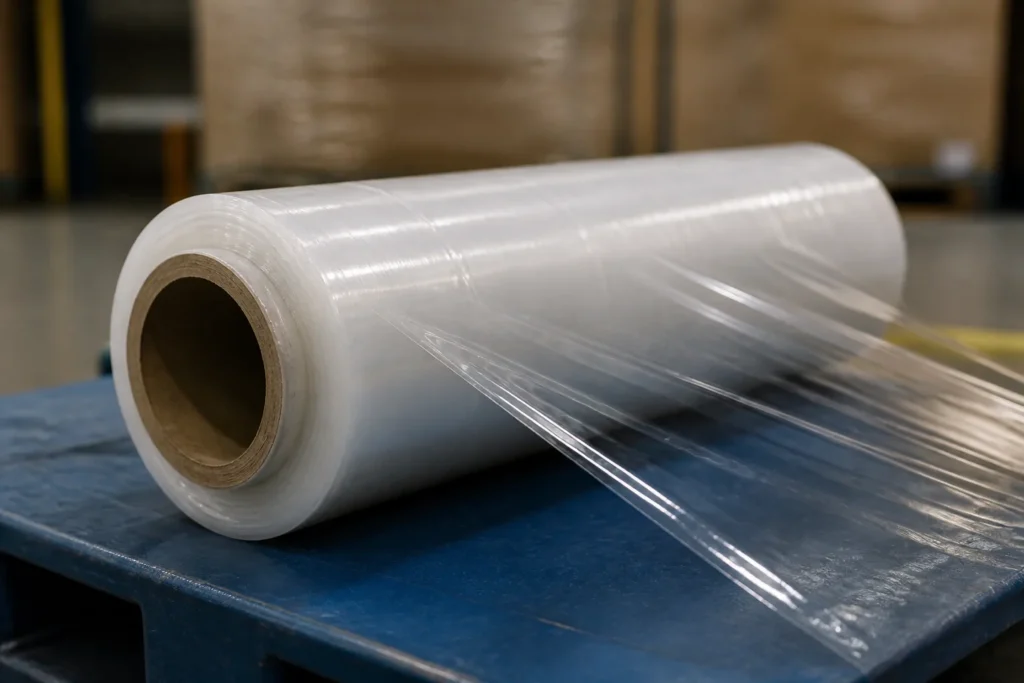
Pre stretched stretch film is produced by stretching film between rollers during converting and winding it under controlled tension, so part of the elongation is already built in. The roll therefore holds less residual stretch than a conventional roll of the same length. Operators notice immediately: the film feels thinner, firmer and easier to control. Ask what stretch level was applied before winding.
| Dimension | Impact | Buyer action / evidence |
|---|---|---|
| Factory stretch | Less user effort | Ask for stretch level |
| Residual stretch | Limits elongation | Trial on your wrapper |
| Roll firmness | Winding quality | Inspect a sample roll |
2. How does pre stretched stretch film differ from conventional film?
Pre stretched stretch film differs from conventional film in where stretching happens and who controls it. With conventional film the operator or wrapper sets stretch on every pallet, so results vary with skill and settings. With pre stretched film the largest part of elongation is fixed at the factory. That moves variation from the dock to the supplier. Compare both on identical pallets.
| Dimension | Impact | Buyer action / evidence |
|---|---|---|
| Control point | Wrap consistency | Side-by-side trial |
| Operator skill | Result variation | Operator comparison |
| Supplier capability | Repeatable supply | Batch samples |
3. Where does pre stretched stretch film fit best?
Pre stretched stretch film fits best where operators wrap by hand, machines lack powered pre-stretch, or management wants consistent containment without retraining staff. It also helps sites with high staff turnover, because a new operator reaches a good wrap quickly. High-speed lines with modern pre-stretch rollers rarely need it. Match the format to your equipment, not a catalogue.
| Dimension | Impact | Buyer action / evidence |
|---|---|---|
| Wrapping method | Format suitability | Dock observation |
| Machine type | Pre-stretch capability | Wrapper specification |
| Staff turnover | Training burden | Induction records |
4. How does pre stretched stretch film affect cost per pallet?
Pre stretched stretch film usually costs more per kilogram because you buy resin already converted into length, yet it can still lower cost per pallet by removing over-wrapping and breaks. The saving appears when operators previously used too much film or applied inconsistent tension. It disappears on a modern wrapper that could stretch conventional film further. Model both options on real consumption.
| Dimension | Impact | Buyer action / evidence |
|---|---|---|
| Price per kilo | Higher unit cost | Quotation comparison |
| Usage per pallet | Lower consumption | Consumption trial |
| Waste | Reduced over-wrap | Waste weight audit |
5. How does pre stretched stretch film perform in hand wrapping?
Pre stretched stretch film performs well in hand wrapping because the film is already thin and firm, so it clings with light tension and needs no dispenser brake. Operators report less arm fatigue across a shift and fewer loose wraps at the top. The film also tears more predictably at the end of a wrap. Time a shift with each format to see the difference.
| Dimension | Impact | Buyer action / evidence |
|---|---|---|
| Tension needed | Operator fatigue | Shift timing study |
| Cling behaviour | Wrap tightness | Visual inspection |
| Tear quality | Clean finish | End-of-wrap trial |
6. How does pre stretched stretch film perform on automatic wrappers?
Pre stretched stretch film performs unevenly on automatic wrappers because the machine may try to stretch film with little elongation left, causing breaks or loose wraps. Some wrappers can be set to near-zero pre-stretch to run it, which defeats the machine’s purpose. Check the wrapper’s minimum pre-stretch setting before ordering. If it cannot go low enough, use conventional film.
| Dimension | Impact | Buyer action / evidence |
|---|---|---|
| Residual elongation | Break risk | Elongation test |
| Wrapper minimum | Feasibility | Parameter menu check |
| Wrap tightness | Containment | Trial pallet inspection |
7. How should a buyer choose between pre stretched and conventional film?
Buyers should choose between pre stretched and conventional film by comparing wrapping method, operator consistency and consumption data. If operators hand wrap and consumption is high, pre stretched film often wins. If a modern wrapper runs conventional film at high pre-stretch, conventional film usually wins on price. Trial both for two weeks and record kilos and damage.
| Dimension | Impact | Buyer action / evidence |
|---|---|---|
| Method | Format fit | Dock assessment |
| Consumption | Savings potential | Two-week trial |
| Damage | Containment quality | Arrival inspection |
8. What should a buyer check before ordering pre stretched stretch film?
Before ordering pre stretched stretch film, buyers should confirm factory stretch level, residual elongation, roll length and core size, and test one roll on their own pallets. Check that width matches load height and roll weight is manageable. Ask how stretch consistency is controlled between batches. Request a written specification with each shipment.
| Dimension | Impact | Buyer action / evidence |
|---|---|---|
| Stretch level | Usable performance | Supplier declaration |
| Roll length | Cost per metre | Label and measurement |
| Batch consistency | Reliable supply | Specification per lot |
Frequently Asked Questions
Q1. Is pre stretched stretch film weaker than normal film?
Pre stretched film is not weaker in containment terms, but it has less elongation left, so it cannot be stretched much further. Its strength comes from controlled application rather than extra stretch on the dock.
Q2. Can pre stretched film be used on a machine?
It can run on machines that allow very low pre-stretch, but most automatic wrappers are designed for conventional film and will break it at normal settings. Check the machine range first.
Q3. Why is pre stretched film more expensive per kilo?
There are fewer kilos per metre because much of the resin has already been converted into length. You pay more per kilo but use fewer kilos per pallet, so compare cost per pallet.
Q4. Does pre stretched film work in cold warehouses?
It becomes less flexible in cold conditions like any polyethylene film, so cling and tear behaviour change. Test in your actual cold room before committing to a winter specification.
Q5. Can RX Packaging supply pre stretched film in cast and blown structures?
RX Packaging produces cast and blown stretch film and can discuss pre stretched supply against your wrapping method, so request samples of both before standardising a format.