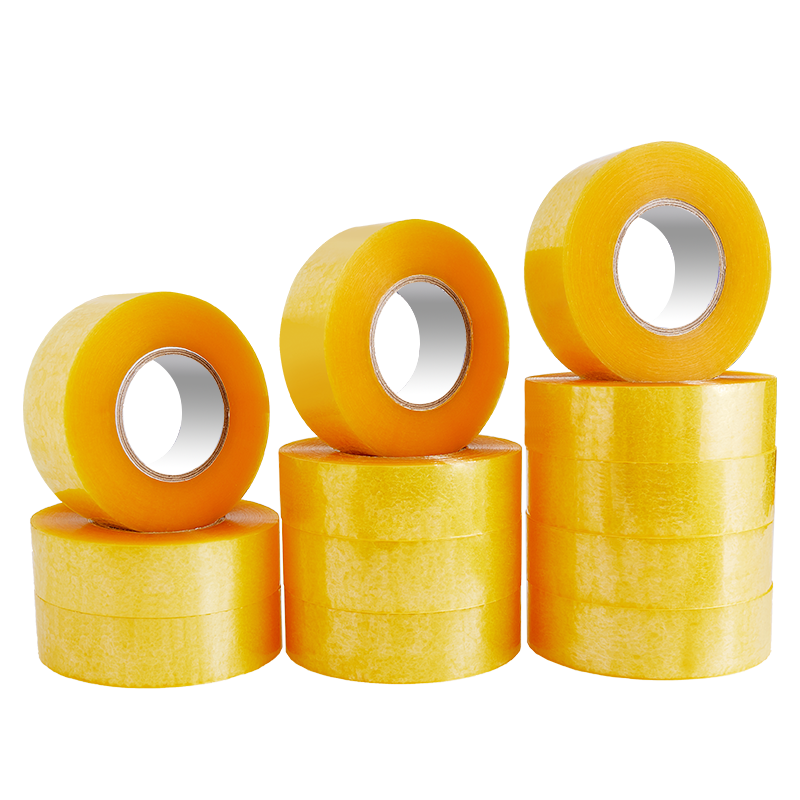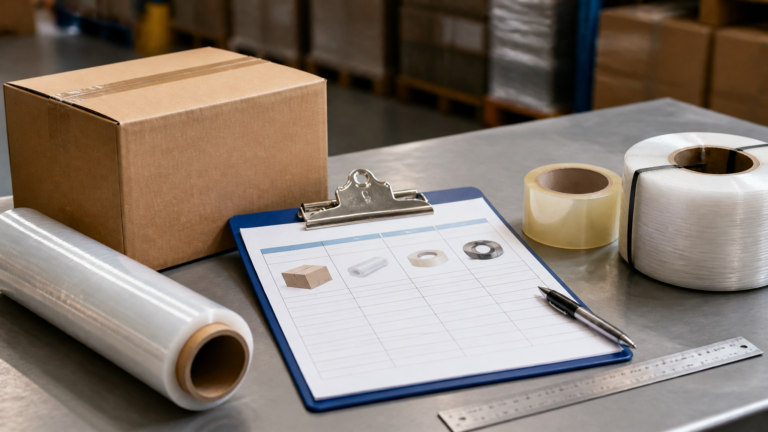
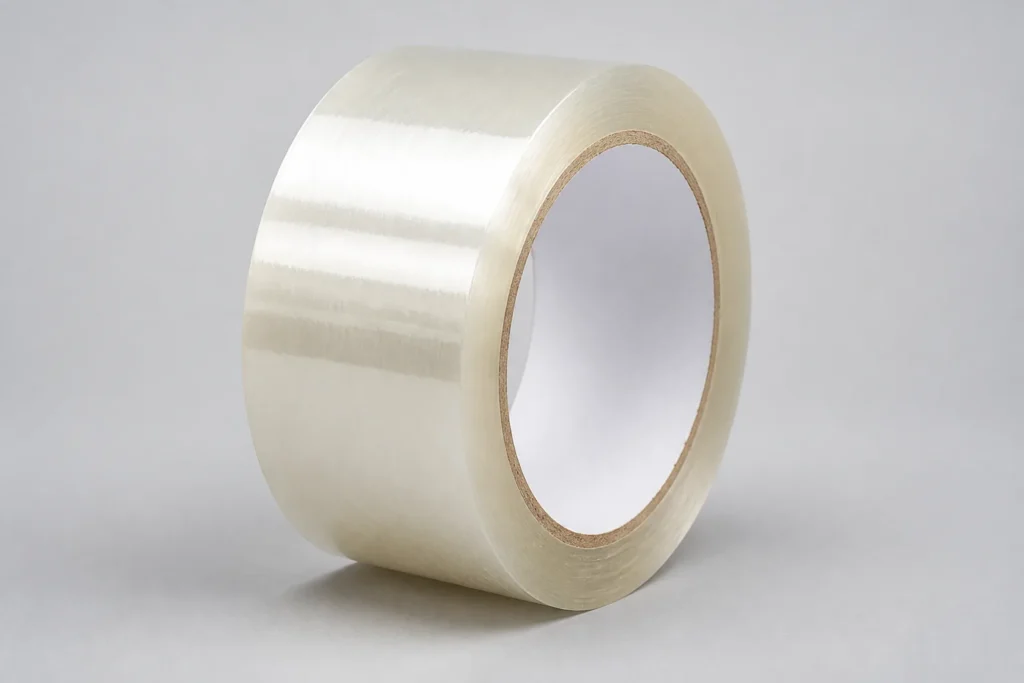
Packing tape cold weather failure happens when the adhesive stiffens and loses tack below its application temperature. A tape that seals perfectly in a warm warehouse can pop open in a freezer or an unheated truck overnight. This guide helps buyers choose a cold-tolerant tape, match it to the storage route, and test it the way the carton will actually travel.
1. What is packing tape cold weather failure?
Packing tape cold weather failure is the loss of seal when acrylic adhesive stiffens at low temperature and stops gripping the carton board. It usually shows up as lifted flaps or a tape that peels cleanly after the box sits in the cold. The film can also become brittle and split.
Start by identifying the coldest point in your actual route, not the average.
Find the coldest leg of the journey before choosing tape.
| Failure | What happens | Where it shows |
|---|---|---|
| Tack loss | Flap lifts | Freezer or truck |
| Brittle film | Tape splits | Cold warehouse |
| Peel clean | No fibre tear | Unheated transit |
| Open box | Goods exposed | Delivery |
2. How does cold weather differ from a weak tape?
A weak tape fails everywhere; a cold-sensitive tape fails only in the cold. The same roll can hold strongly at room temperature and lift in a freezer. Diagnose by testing the tape at the storage temperature, not at the office desk.
Test at the actual cold condition before blaming the tape.
Confirm the failure temperature before choosing a fix.
| Test | Result | Meaning |
|---|---|---|
| Room temp | Holds | Tape is not weak |
| Chilled | Lifts | Cold sensitivity |
| Frozen | Splits | Film brittleness |
| Cycle | Varies | Temperature swings |
3. Where does cold tape failure cause the most damage?
Cold tape failure causes the most damage in cold chain food, frozen goods, pharmaceuticals, and any shipment that passes through unheated trucks or warehouses in winter. A box that opens in a freezer or a cold trailer leads to contamination, returns, and disputed claims.
Map your cold chain points before specifying tape.
Size the tape to the coldest point on the route.
| Use case | Cold risk | Right response |
|---|---|---|
| Frozen food | Very high | Cold-grade tape |
| Chilled pharma | High | Tested adhesive |
| Winter transit | Seasonal | Cold-tolerant film |
| Ambient goods | Low | Standard tape |
4. Which tape works best in cold conditions?
Cold-grade acrylic tapes with a formulation designed for low temperature hold best. They keep tack below freezing where standard acrylic fails. The film should also stay flexible in the cold so it does not split when the box flexes.
Choose a tape rated for your lowest storage temperature.
Ask for the rated minimum application and service temperature.
| Option | Cold performance | Suitability |
|---|---|---|
| Standard acrylic | Fails near freezing | Ambient only |
| Cold-grade acrylic | Holds below freezing | Cold chain |
| Hot melt | Tack but stiff | Not for freezer |
| Thick coat | Better grip | Rough board |
5. How should a buyer choose cold-weather tape?
Choose by testing the tape at the actual cold temperature on the actual carton, then holding it there for hours before checking the seal. A quick cold test misses the slow tack loss that happens over time. Match the tape to the lowest temperature and the longest dwell.
Test cold, test long, and test on real board.
RX Packaging supplies cold-grade tape from Foshan, made since 2007 under SGS-certified production. Buyers can request a temperature-rated sample.
| Step | What to do | Why |
|---|---|---|
| Chill | Cool the carton | Real condition |
| Apply | At working temp | Real tack |
| Hold | For the dwell | Slow loss |
| Check | After hours | True hold |
6. What should buyers check before ordering?
Buyers should check the rated application and service temperature, the adhesive type, and whether the tape was tested on cold board. Ask for the supplier’s cold-performance data and a sample to test in your own cold room. Release bulk only after the sample holds at your temperature.
Request the temperature rating and a cold-room sample.
Confirm the sample holds at your coldest point before bulk.
| Check | What to request | Why |
|---|---|---|
| Temp rating | Min application temp | Fit to route |
| Adhesive | Cold-formulated | Low-temp tack |
| Coat weight | Heavier for rough | Better grip |
| Sample | Cold-room test | Real proof |
7. How can application technique help in the cold?
Applying tape in a cold room is harder because the adhesive is already stiff. Pre-warming the tape or the carton surface, using more tape, and applying firm pressure all improve the bond. But technique only helps so far; it cannot rescue a tape rated for the wrong temperature.
Warm the surface and press firmly when sealing in the cold.
Fix technique first, then the tape if it still fails.
| Technique | Effect | Limit |
|---|---|---|
| Warm surface | Better tack | Not a cure-all |
| Firm pressure | Better wet-out | Helps bond |
| Longer run | More hold area | Uses more tape |
| Seal early | Before chill | Best practice |
8. How does temperature cycling affect the seal?
Temperature cycling, where a box moves from cold to warm and back, stresses the adhesive with repeated expansion and contraction. A tape that holds in steady cold can still lift after many cycles. Frozen goods that thaw and refreeze are the worst case.
Consider cycling, not just a steady low temperature.
Test the tape through a full cycle if the route cycles.
| Cycle | Stress | Effect on tape |
|---|---|---|
| Cold to warm | Expansion | Seal stress |
| Warm to cold | Contraction | Lift risk |
| Condensation | Wet surface | Tack loss |
| Repeat | Fatigue | Slow failure |
9. Should a buyer stock a separate cold-weather tape?
Stock a separate cold-weather tape when a meaningful share of shipments travels through cold. Running two tapes adds a SKU but prevents cold failures that a single ambient tape cannot avoid. For mostly-ambient operations, a single good tape may be enough.
Add a cold SKU only when cold routes are a real share.
Stock by route share, not by fear of one failure.
| Situation | Stock decision | Reason |
|---|---|---|
| High cold share | Separate SKU | Prevent failures |
| Winter peak | Seasonal SKU | Cover the surge |
| Ambient | One tape | Simpler |
| Rare cold | Monitor | Avoid waste |
10. What should buyers request before ordering cold tape?
Buyers should request the rated temperature range, the adhesive formulation, a cold-room sample, and test results on cold board before ordering. Confirm the tape holds at the lowest route temperature and through the expected dwell. Release bulk only after the sample passes.
Request the temperature data and a cold-room sample.
For cold-grade packing tape matched to your route, contact RX Packaging for a temperature-rated sample.
| Request | Why | Decision |
|---|---|---|
| Temp range | Fit to route | Spec approval |
| Formulation | Cold tack | Adhesive check |
| Sample | Cold-room proof | Bulk approval |
| Test data | Real performance | Confidence |
Q1. Why does packing tape fail in the cold?
The acrylic adhesive stiffens at low temperature and loses tack, so it stops gripping the carton. The film can also become brittle and split.
Q2. What temperature does packing tape fail?
Standard acrylic tape typically struggles near or below freezing. Cold-formulated tape is rated to hold at lower temperatures, so check the supplier’s rating.
Q3. Can I use hot melt tape in a freezer?
Hot melt tape has strong initial tack but can stiffen in extreme cold. Cold-grade acrylic is usually the better choice for freezer use.
Q4. How do I test tape for cold weather?
Chill a filled carton, apply the tape at operating temperature, hold it cold for the expected dwell, then check whether the flap stays sealed.
Q5. What should I send for a cold-weather tape quote?
Send your lowest storage temperature, the dwell time, the carton board type, and whether the route cycles between temperatures. Ask for a temperature-rated sample.