Export Strapping Compliance: A Buyer Checklist for Shippers
Export strapping compliance means the band, the pallet and the paperwork all satisfy the rules your destination and your customer apply. It covers wood packaging treatment, container weight declaration, band performance in transit and documentation that matches what was shipped. Non-compliance shows up as rejected loads, delays or claims. This guide helps buyers build a compliance checklist before the first container leaves.
1. What does export strapping compliance actually cover?
Export strapping compliance covers three layers: the packaging material, the unitised load and the documents. The band must hold the load through a full container cycle, the pallet must meet the destination wood rules, and the paperwork must describe both accurately. Missing any layer blocks the shipment even when the band itself is strong.
Build your checklist around material, load and documents, not band strength alone.
| Dimension | Impact | Buyer action / evidence |
|---|---|---|
| Band specification | Load containment at sea | Keep spec sheets per lane |
| Pallet treatment | Customs rejection risk | Retain treatment certificates |
| Documentation | Clearance delays | Check paperwork before booking |
2. How does export strapping compliance differ by destination?
Export strapping compliance differs by destination because wood packaging rules, customer specs and handling standards vary. Some markets enforce strict wood treatment and inspect pallets on arrival, while others focus on labelling and weight declaration. Retail customers often add their own pallet height and strapping rules. Treat each lane as its own requirement set.
Keep a one-page requirement sheet per destination lane.
| Dimension | Impact | Buyer action / evidence |
|---|---|---|
| Destination rules | Rejection or fines | Confirm rules before booking |
| Customer spec | Chargebacks | Get the spec in writing |
| Inspection regime | Arrival delays | Ask your forwarder for history |
3. Where does export strapping compliance fail in the supply chain?
Export strapping compliance usually fails at the handover points: packing, container loading and arrival inspection. A band tensioned for a warehouse test may relax in a hot container, a pallet may be swapped for an untreated one at the last minute, and paperwork may describe a different pallet type. Each handover needs a check.
Add a signed check at packing, loading and arrival.
| Dimension | Impact | Buyer action / evidence |
|---|---|---|
| Handover gaps | Uncontrolled changes | Sign off at each stage |
| Pallet substitution | Compliance breach | Mark and verify treated pallets |
| Transit climate | Band relaxation | Trial in container conditions |
4. Which strapping specification meets export strapping compliance needs?
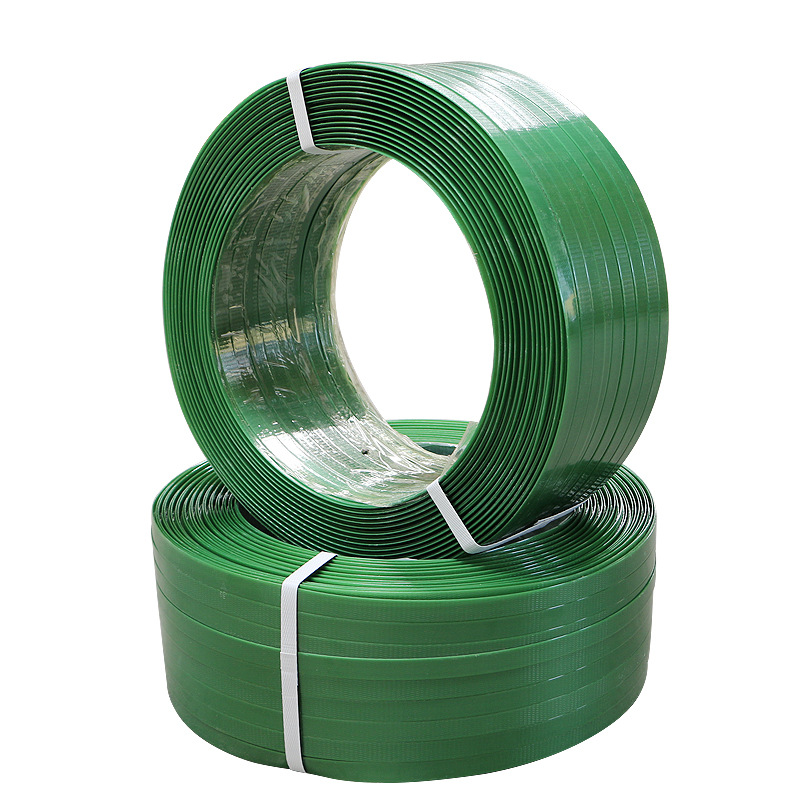
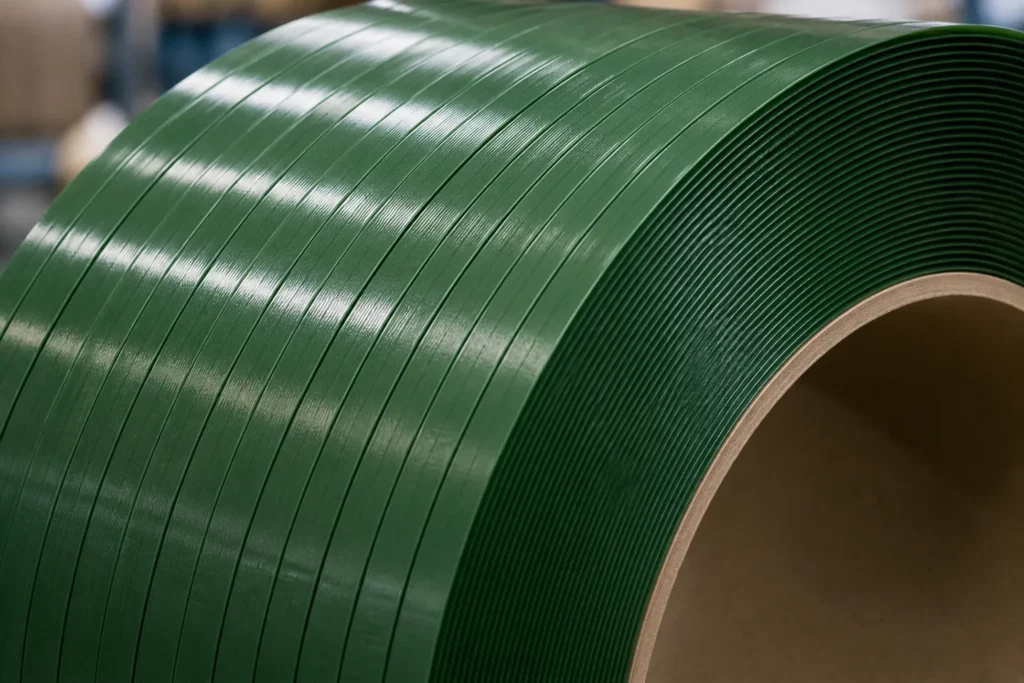
A compliant export specification usually means PET band, adequate width, edge protection and a documented tension setting. PET holds tension through heat and long dwell, which is what sea freight demands. PP can serve light export cartons on short routes but relaxes in containers. The specification should also state band colour and marking if the customer requires it.
Write the export specification once and lock it to the lane.
| Dimension | Impact | Buyer action / evidence |
|---|---|---|
| Polymer | Tension through transit | Compare retention data at heat |
| Width | Load contact and cut risk | Trial on the heaviest export SKU |
| Protection | Corner survival | Inspect arrival damage photos |
5. How should a buyer document export strapping compliance?
Export strapping compliance is documented with a specification sheet, a pallet treatment record and a loading check. The specification should name polymer, width, strap count and tension, while the treatment record proves the pallet meets destination rules. Keep the documents with the shipment file so an inspection can be answered quickly.
Keep one compliance file per shipment, not per year.
| Dimension | Impact | Buyer action / evidence |
|---|---|---|
| File completeness | Fast customs response | Audit files monthly |
| Version control | Old specs in use | Date every specification |
| Photo evidence | Settles claims | Photograph sealed pallets |
6. What should you check for export strapping compliance before shipping?
Before shipping export pallets, check band tension, pallet condition, marking and paperwork against the lane requirements. Confirm that straps sit in the correct pattern, that protectors are present where specified, and that no pallet has been swapped for an untreated unit. A five-minute check prevents a rejected container.
Run a pre-loading check with a written checklist and a signature.
| Dimension | Impact | Buyer action / evidence |
|---|---|---|
| Pre-load check | Catches last-minute swaps | Use a signed checklist |
| Tension verification | Prevents loose loads | Spot-check ten pallets |
| Marking | Arrival inspection | Photograph marks and labels |
7. How does wood packaging interact with export strapping compliance?
Wood packaging interacts with export strapping compliance because many destinations require treated and marked wood, and the strap must work with that pallet. Treated wood can be drier and harder, which changes how bands grip and how corners behave. A compliant pallet with a poorly chosen band still fails inspection if the load shifts.
Confirm pallet treatment first, then match the band to that pallet.
| Dimension | Impact | Buyer action / evidence |
|---|---|---|
| Treatment status | Customs acceptance | Keep supplier certificates |
| Wood condition | Band grip and cuts | Inspect pallets on arrival |
| Marking quality | Inspection speed | Check legibility before loading |
8. Should you standardise one band for export strapping compliance across lanes?
Standardising one band for all export lanes simplifies buying but risks over- or under-specifying individual routes. Lanes with long sea transit and heavy loads need PET, while short regional routes may accept PP. A single export standard usually settles on PET, then varies width and strap count by product.
Standardise the polymer, then vary width and count by lane.
| Dimension | Impact | Buyer action / evidence |
|---|---|---|
| Standardisation | Simpler buying and training | Set PET as the export default |
| Over-specification | Cost on light cartons | Review light lanes separately |
| Exceptions | Uncontrolled variation | Require written approval |
Q1. Is export strapping compliance only about the band?
No. It also covers pallet treatment, load containment, weight declaration and documentation. A strong band on a non-compliant pallet still fails at the border.
Q2. Does PP band meet export compliance?
PP can be compliant if the lane and load allow it, but it relaxes in hot containers over long transit. Most exporters standardise on PET for sea freight and reserve PP for short regional routes.
Q3. What documents should travel with export pallets?
Keep the band specification, pallet treatment record, loading checklist and photos in the shipment file. They answer inspection questions and support claims quickly.
Q4. How do I check compliance across several destinations?
Keep a one-page requirement sheet per lane covering wood rules, customer specs, weight declaration and labelling, then review it whenever a route or customer changes.
Q5. What should I request before ordering export band?
Request retention data at container temperatures, samples in your widths and a loaded transit trial. RX Packaging, a Foshan manufacturer since 2007, supplies SGS-certified PP and PET band with 12-point quality results.