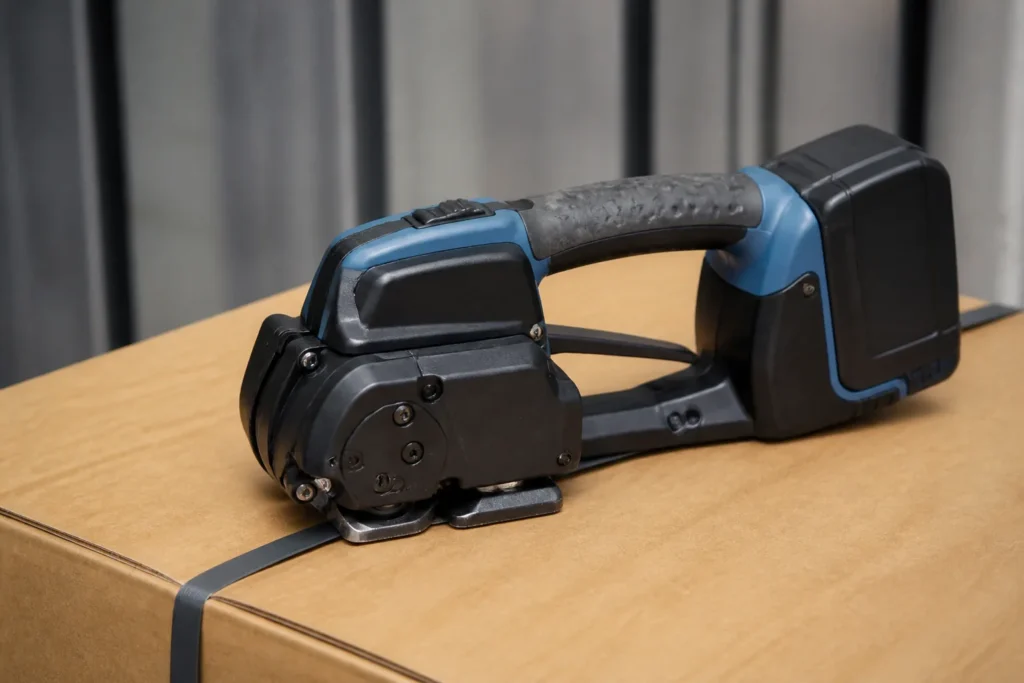
Strapping Tensioner Tools: Choosing the Right Tension for the Load
Strapping tensioner tools apply and hold band tension so a seal can close under load, and the tool decides whether that tension is repeatable. A weak or worn tensioner produces loose pallets; an overpowered one crushes cartons and splits band. Tool choice must match polymer, band width and volume. This guide helps buyers pick a tensioner, test it properly and keep it performing.
1. What do strapping tensioner tools actually do?
A strapping tensioner pulls the band around the load, holds the tension and lets the operator close a seal before cutting. The tool must reach working tension without damaging the band or the carton. Tension quality then depends on the seal holding what the tool applied.
Treat tensioner and sealer as one system, not two purchases.
| Dimension | Impact | Buyer action / evidence |
|---|---|---|
| Pull capacity | Reaches working tension | Confirm rating for band width |
| Grip | Slips or marks band | Trial on your own band |
| Release | Band snap-back risk | Test the release sequence |
2. How do strapping tensioner tools differ by band type?
Strapping tensioner tools differ by band type because PP and PET behave differently under load. PP stretches easily and needs less pulling effort, while PET resists stretching and demands a stronger tool with a firmer grip. Using a light PP tensioner on PET usually ends in slipping, slow cycles or incomplete tension.
Match the tensioner rating to the polymer before ordering.
| Dimension | Impact | Buyer action / evidence |
|---|---|---|
| Polymer | Tool effort and grip | Trial both polymers on one tool |
| Band width | Grip and pull capacity | Check the width range on the tool |
| Seal method | Tool and seal combination | Confirm matched pairs |
3. Where do strapping tensioner tools fail on the line?
Strapping tensioner tools fail at the gripper, the cutter and the release mechanism. A worn gripper slips on the band so tension never reaches target, a dull cutter leaves long tails, and a sticky release lets band snap back and injure the operator. Most failures are maintenance issues, not design faults.
Inspect gripper and cutter at the start of every shift.
| Dimension | Impact | Buyer action / evidence |
|---|---|---|
| Gripper wear | Tension shortfall | Check grip marks on band |
| Cutter condition | Tail waste and fray | Cut ten bands and inspect |
| Release action | Operator safety | Test the sequence before use |
4. Which strapping tensioner tools suit your volume?
Strapping tensioner tools should match volume and band size. Manual ratchet or feedwheel tools suit low volume, repairs and mixed sizes. Pneumatic or battery-powered tools suit repeated cycles where operator fatigue limits output. Automatic machine tensioning suits high, stable volume with fixed pallet sizes.
Set your pallets per shift first, then choose manual, powered or machine tensioning.
| Dimension | Impact | Buyer action / evidence |
|---|---|---|
| Pallets per shift | Tool class | Count output for a week |
| Band width | Tool size | List widths used per station |
| Operator fatigue | Powered option | Observe a full shift |
5. How should a buyer choose strapping tensioner tools?
Choosing strapping tensioner tools starts with band, then volume, then ergonomics. Confirm the tool accepts your band width and polymer, check that it reaches the tension your load needs, and weigh the tool for operator comfort. Then verify spare parts availability before committing.
Ask for the spare parts list before you approve the tool.
| Dimension | Impact | Buyer action / evidence |
|---|---|---|
| Band compatibility | Slips and jams | Trial with your own coil |
| Tension target | Load security | Check with a tension gauge |
| Serviceability | Downtime length | Confirm local spare stock |
6. What should you check in a strapping tensioner tools demonstration?
A tensioner demonstration should use your band, your cartons and your operators. Watch whether the tool reaches tension in one pull, whether the gripper marks the band, and how quickly the operator completes a full cycle. Then repeat after twenty cycles, when the tool has warmed up and the operator has found shortcuts.
Run at least twenty cycles in the demo, not two.
| Dimension | Impact | Buyer action / evidence |
|---|---|---|
| Cycle consistency | Output and quality | Time twenty cycles |
| Band damage | Strength loss | Inspect band after tensioning |
| Operator feedback | Long-term adoption | Ask the operator directly |
7. How does maintenance of strapping tensioner tools affect seal quality?
Tensioner maintenance affects seal quality because a weak pull leaves slack that the seal cannot fix. If tension is low, the seal closes on a loose loop and the pallet moves; if tension is too high, the band necks and weakens near the joint. A gauge check and clean gripper keep both in range.
Set a weekly tension check with a gauge and record the result.
| Dimension | Impact | Buyer action / evidence |
|---|---|---|
| Tension setting | Load security | Check with a gauge weekly |
| Gripper cleanliness | Grip consistency | Clean and inspect per shift |
| Seal inspection | Confirms the loop | Pull-test ten seals per shift |
8. Should you buy manual or powered strapping tensioner tools?
Manual or powered tensioner tools come down to cycle count and operator comfort. Manual tools cost less, need no power and suit mixed or low volume. Powered tools cut effort and cycle time where operators seal hundreds of pallets per shift. Many plants use both, with manual tools as backup.
Choose powered tools when fatigue, not tool price, limits output.
| Dimension | Impact | Buyer action / evidence |
|---|---|---|
| Cycle count | Tool class | Count straps per shift |
| Fatigue | Quality drift | Compare seals late in shift |
| Power and air | Site readiness | Check supply at the station |
Q1. Why does my tensioner slip on the band?
A worn gripper, the wrong band width or a tool rated for PP used on PET will all cause slipping. Check grip marks on the band and confirm the tool rating before replacing parts.
Q2. Can one tensioner handle both PP and PET?
Some can at moderate tension, but PET needs a firmer grip and stronger pull. Confirm the rating with the supplier and trial both polymers before relying on one tool.
Q3. How often should tensioners be serviced?
Inspect gripper and cutter every shift and check tension with a gauge weekly. Replace worn parts before they affect seal quality, and keep spares at the station.
Q4. Does higher tension always mean a safer pallet?
No. Over-tension necks the band, crushes cartons and can cut edges. Set tension by trial on the real product and verify with a gauge.
Q5. What should I request before buying a tensioner?
Request a demo with your band and cartons, a spare parts list and a tension gauge check. RX Packaging supplies matched band and tools so tensioner, seal and polymer are tested together.