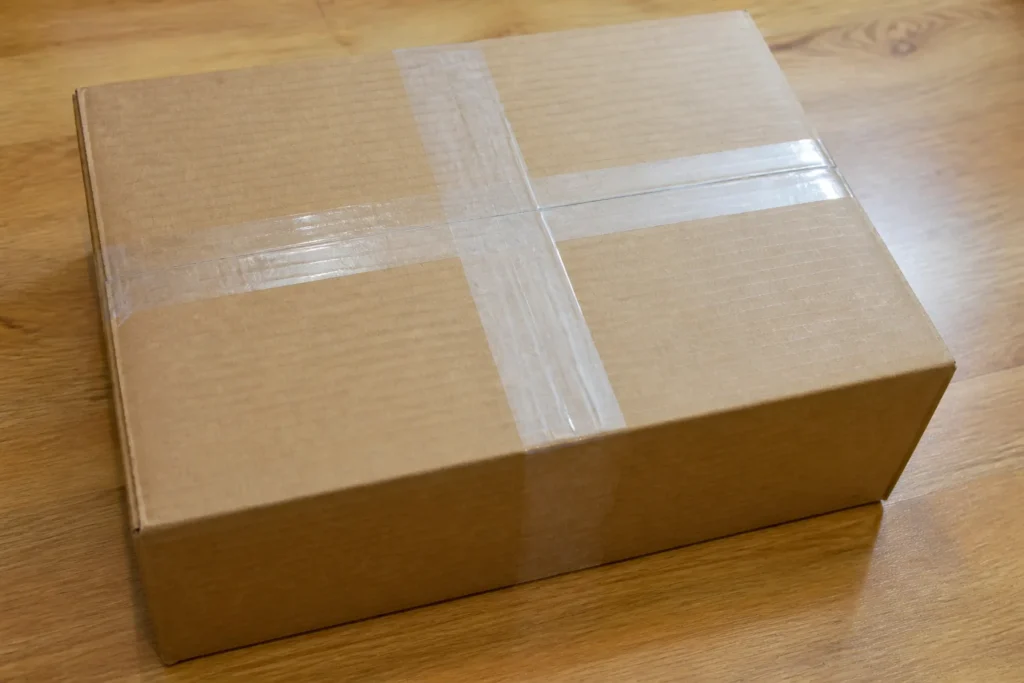
Cold Chain Packing Tape: A Seal That Survives Condensation and Frost
Cold chain packing tape is tape specified to keep a carton sealed through chilled and frozen storage, condensation cycles and transfer between temperature zones. Standard tape often works at the bench and fails in the cold room, because cold board, frost and moisture change how adhesive behaves. The failure usually appears after the carton has left the line. This guide helps buyers decide which cold chain packing tape fits their temperature profile, how to test it, and what to confirm before ordering.
1. What is cold chain packing tape and why does cold break ordinary tape?
Cold chain packing tape is tape whose adhesive is formulated to wet out and hold on cold, damp or frosted board. Cold surfaces pull heat from the adhesive on contact, so a standard adhesive thickens before it can flow into the fibres. Frost adds a physical barrier that prevents contact entirely.
| Dimension | Impact | Buyer action / evidence |
|---|---|---|
| Surface temperature | Tack development slows sharply | State the lowest application temperature |
| Application temperature | Tack falls as board cools | Measure the surface |
2. How does cold chain packing tape differ from standard packing tape?
Cold chain packing tape differs from standard packing tape in adhesive formulation, film flexibility and the range over which it is tested. A cold-grade adhesive stays softer so it can still flow, and a flexible film resists cracking at freezer temperatures. Standard tape can pass a bench test and fail overnight.
| Dimension | Impact | Buyer action / evidence |
|---|---|---|
| Adhesive | Standard adhesive loses tack at once | Request cold-condition data |
| Film flexibility | Brittle film cracks | Flex a frozen sample |
3. Where does cold chain packing tape fit in a cold operation?
Cold chain packing tape fits at three points: sealing in a cold or chilled room, closing cartons that will enter cold storage, and re-sealing after inspection or picking in a temperature-controlled area. Each point has a different surface temperature. Specify for the coldest point, not the bench.
| Dimension | Impact | Buyer action / evidence |
|---|---|---|
| Cold-room packing | Board is cold at application | Specify for that temperature |
| Zone count | More transfers mean more risk | Count zone changes |
4. Which cold chain packing tape suits frozen, chilled and transfer duty?
The specification that suits frozen duty needs the widest temperature tolerance and the most flexible film, chilled duty needs reliable tack on damp board, and ambient transfer needs condensation resistance more than extreme cold. Buyers running several bands should split the specification rather than buy one tape.
| Dimension | Impact | Buyer action / evidence |
|---|---|---|
| Frozen | Film brittleness is the main risk | Flex test at the lowest temperature |
| Dwell time | Cold cartons warm while waiting | Seal promptly |
5. How should a buyer choose cold chain packing tape?
A buyer should choose cold chain packing tape by recording the actual surface temperature at each sealing point, then testing candidates on cartons conditioned to those temperatures. The temperature log is the specification. Assumptions about cold are usually wrong by several degrees.
| Dimension | Impact | Buyer action / evidence |
|---|---|---|
| Measurement | Air temperature is not surface temperature | Use a contact thermometer |
| Thermometer | Air readings mislead | Use a contact probe |
6. What should buyers check in cold chain packing tape adhesion?
Buyers should check cold-condition adhesion through peel strength and edge lift on cartons that have been through the full temperature cycle, not just at application. The critical moment is often hours later, when the carton has cooled and condensation has formed. A tape that holds at the bench proves little.
| Dimension | Impact | Buyer action / evidence |
|---|---|---|
| Peel strength | Primary measure of cold tack | Ask for service-temperature results |
| Frost level | Heavy frost blocks contact | Brush off loose ice |
7. How does condensation affect cold chain packing tape over time?
Condensation affects cold chain packing tape by wetting the board and cooling the adhesive interface every time a carton moves between zones, so the bond weakens progressively. Each cycle adds water and stress. Cartons crossing zones repeatedly need a higher specification than those staying in one room.
| Dimension | Impact | Buyer action / evidence |
|---|---|---|
| Board moisture | Soft board gives less grip | Test damp-conditioned cartons |
| Cycle count | Repeated wetting weakens bonds | Test three cycles |
8. What should a buyer request before ordering cold chain packing tape?
A buyer should request cold-condition test data, production samples and a written specification naming the adhesive grade before ordering cold chain packing tape. These let a buyer verify performance at the temperature that matters. For a new cold store, a small pilot is cheaper than a failed pallet.
| Dimension | Impact | Buyer action / evidence |
|---|---|---|
| Test data | Confirms performance where it counts | Match the test temperature to your store |
| Pilot size | Small pilots reveal process issues | Inspect after one cycle |
Q1. Can ordinary packing tape be used in a freezer?
Ordinary tape can sometimes seal a cold carton, but its adhesive stiffens and may never develop full tack, so failures appear hours later. Freezer duty needs a tape tested at that temperature. Treat freezer use as a separate specification.
Q2. Why does tape lift off cartons leaving a cold room?
Tape lifts because condensation wets the board and seam as the carton warms, reducing peel strength just as the film contracts. The failure is a moisture problem as much as a cold one. A moisture-resistant cold-grade adhesive with adequate overlap reduces the risk.
Q3. Does cold chain packing tape work on wet or frosted cartons?
Performance depends on the adhesive grade and how much frost is present. Heavy frost blocks contact entirely, so remove it before sealing where the process allows. Test the tape on cartons in the condition they will actually be sealed.
Q4. Is cold chain packing tape more expensive?
Cold-grade tapes generally cost more because the adhesive formulation is more demanding. Compare that premium with the cost of a failed pallet, a rejected delivery and a claim. In most cold operations the premium is small relative to the risk.
Q5. How should a buyer trial cold chain packing tape?
Condition cartons to the real storage temperature, seal them as the process requires, move them through the actual cycle and inspect after 24 hours. Check seams, corners and edges. RX Packaging can supply current-batch samples so the trial reflects production quality. RX Packaging can supply current-batch samples and a 12-point quality report so the specification is verified before the order is placed.