Stretch film and shrink wrap are both thin plastic films used to protect and secure products, but they work in completely different ways. Mixing them up can cost you money — either through wasted material or damaged loads.
The short answer: stretch film stretches and clings under tension to hold palletized loads together, while shrink wrap is a looser film that shrinks tightly around a product when heat is applied. Use stretch film for palletizing and bundling in the warehouse; use shrink wrap for retail packaging, multipacks, and tamper-evident sealing.
What Is Stretch Film?
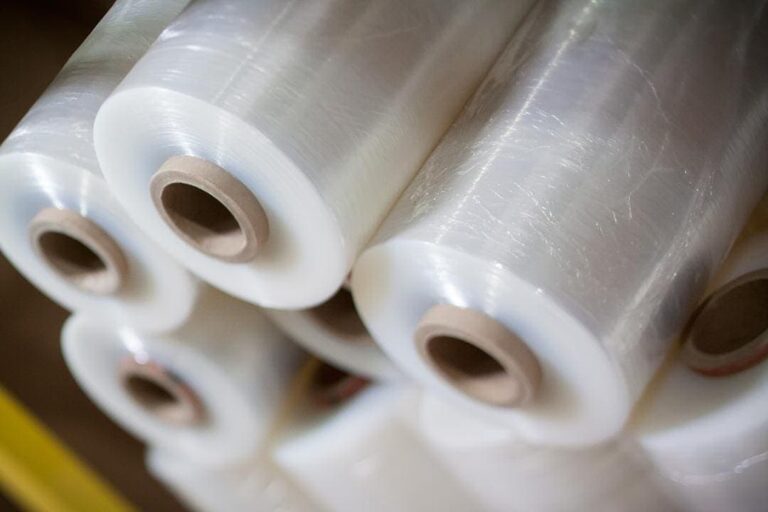
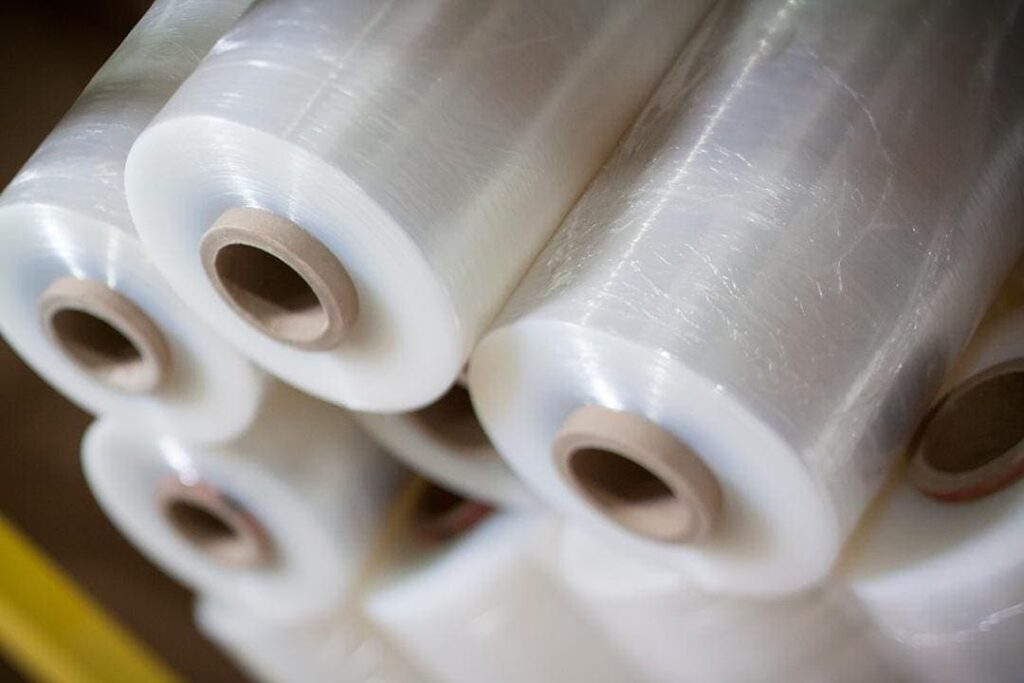
Stretch film — also called pallet wrap or stretch wrap — is a highly elastic plastic film, typically made from linear low-density polyethylene (LLDPE). It is stretched around palletized goods and held in place by its own elastic recovery: as the film tries to return to its original shape, it applies constant pressure that keeps the load tight.
Stretch film is applied with a handheld dispenser or a wrapping machine, and it does not need heat. Its cling comes from the film itself, not from adhesive.
RX Packing supplies both transparent LLDPE pallet stretch film and colored stretch film for color-coding and tamper-evident pallet loads.
What Is Shrink Wrap?
Shrink wrap is a film that shrinks when heat is applied, tightening around whatever it covers. It is usually made from polyolefin (POF), PVC, or polyethylene. Shrink wrap starts loose, so you can slip it over a product or bundle, and then heat — from a heat gun or a shrink tunnel — makes it contract into a snug, clear cover.
Because shrink wrap conforms tightly and shows the product clearly, it is widely used for retail packaging, protecting printed materials, and bundling multipacks.
Stretch Film vs Shrink Wrap: Key Differences
| Factor | Stretch Film | Shrink Wrap |
|---|---|---|
| How it works | Stretches and clings under tension | Shrinks when heat is applied |
| Heat required | No | Yes (heat gun or tunnel) |
| Typical materials | LLDPE | Polyolefin, PVC, or polyethylene |
| Best for | Palletizing, bundling warehouse loads | Retail packaging, multipacks, tamper evidence |
| Load containment | High, via constant tension | High, via tight conforming fit |
| Product visibility | Clear film, looser around item | Very tight, glossy finish |
| Typical application | Dispenser or wrapping machine | Heat gun, shrink tunnel |
When to Use Stretch Film
- Securing pallets for storage and transit
- Bundling irregular or shifting loads
- Wrapping high volumes of cartons in a warehouse
- Color-coding loads by destination or product line
When to Use Shrink Wrap
- Unitizing consumer products for retail shelves
- Bundling multipacks (bottles, cans, boxes)
- Protecting printed goods, books, and boxed items from dust and moisture
- Adding tamper-evident sealing to products
How to Choose Between Stretch Film and Shrink Wrap
- Identify what you are securing: a pallet of cartons or individual consumer products?
- Check whether heat equipment is available — stretch film needs none, shrink wrap does
- Decide on presentation: shrink wrap gives a tighter, glossier retail finish
- Match the film to your volume and application method (hand or machine)
- Ask your supplier for samples so you can test load stability and clarity
Frequently Asked Questions
What is the difference between stretch film and shrink wrap?
Stretch film stretches and clings under tension to hold palletized loads, while shrink wrap shrinks tightly around a product when heat is applied. Stretch film needs no heat; shrink wrap does.
Can I use stretch film instead of shrink wrap?
Not for retail-style wrapping. Stretch film holds by tension and will not create the tight, conforming, glossy finish that shrink wrap gives. For palletizing and bundling, stretch film is the better choice.
Is shrink wrap more expensive than stretch film?
Shrink wrap often costs more because of the heat equipment and the film itself, but the real comparison depends on application. Stretch film is usually the more economical choice for palletizing, while shrink wrap adds value for retail presentation.
Does shrink wrap require heat to apply?
Yes. Shrink wrap is applied loose and then heated with a heat gun or shrink tunnel, which makes it contract tightly around the product.
Which is better for palletizing — stretch film or shrink wrap?
Stretch film is the standard for palletizing because it applies constant tension without heat and handles irregular loads well. Shrink wrap is not typically used for large pallets.
Does RX Packing supply stretch film?
Yes. RX Packing supplies transparent LLDPE pallet stretch film and colored stretch film, with support for custom sizes, thicknesses, and colors.
Choosing the Right Supplier
Whichever film your operation needs, the supplier matters as much as the material. Look for a manufacturer with consistent quality control and support for custom specifications. RX Packing has manufactured packaging consumables since 2007, backed by SGS certification and a 12-point inspection process covering tension, corrosion resistance, and elasticity, from its base in Foshan, Guangdong, China.
Need help choosing the right film for your operation? Contact RX Packing for a tailored recommendation and quote.