Stretch Film vs Shrink Wrap: Which Pallet Wrap Should You Choose?
Stretch film vs shrink wrap comes down to how the load is secured: stretch film is applied under tension and holds by elasticity, while shrink wrap is applied loose and tightened with heat. Stretch film needs no heat tunnel and suits most pallet loads. Shrink wrap gives a tight, sealed bundle and suits retail multipacks and weather exposure. This guide helps buyers decide which system fits their loads, equipment and budget in 2026.
1. What is the core difference between stretch film vs shrink wrap?
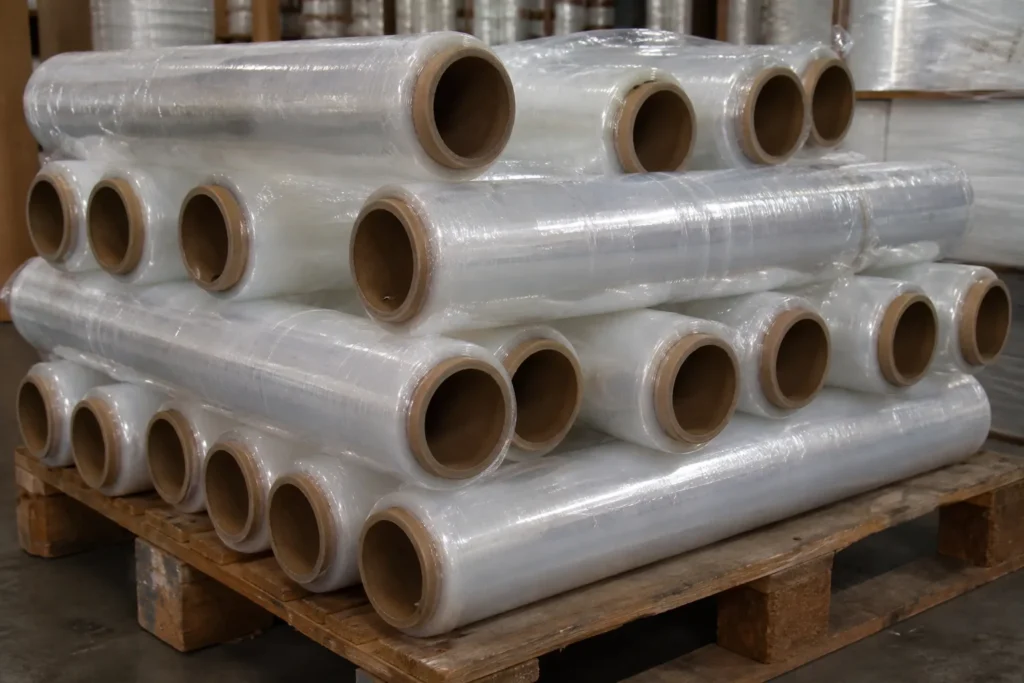
Stretch film vs shrink wrap differ in mechanism: stretch film is elongated during application and grips by elastic recovery, while shrink wrap is applied oversized and shrinks when heated. Stretch film stays flexible and is easy to cut off. Shrink wrap becomes a rigid, sealed skin. The mechanism decides equipment, speed and cost. Match the mechanism to the load.
| Dimension | Impact | Buyer action / evidence |
|---|---|---|
| Mechanism | Equipment needed | Process review |
| Seal quality | Weather protection | Load exposure test |
| Removal | Unpacking labour | Receiving feedback |
2. How does equipment cost compare for stretch film vs shrink wrap?
Equipment cost for stretch film vs shrink wrap is very different: stretch film needs only a dispenser or a wrapping machine, while shrink wrap needs a heat tunnel or shrink hood and usually more energy. That capex gap decides many projects before film price is discussed. Calculate total cost including energy and maintenance. Start with the equipment, not the roll price.
| Dimension | Impact | Buyer action / evidence |
|---|---|---|
| Capex | Project feasibility | Equipment quotes |
| Energy | Running cost | Utility estimates |
| Maintenance | Uptime | Service requirements |
3. How does film cost per pallet compare for stretch film vs shrink wrap?
Film cost per pallet for stretch film vs shrink wrap depends on load size and gauge, and stretch film usually consumes less material per pallet because it is applied thin and stretched. Shrink wrap needs enough thickness to survive heating and to hold a seal. Measure kilos per pallet for both rather than comparing roll prices. Include energy in the shrink figure.
| Dimension | Impact | Buyer action / evidence |
|---|---|---|
| Material used | Direct cost | Consumption trial |
| Energy | Hidden shrink cost | Utility data |
| Scrap rate | Yield | Waste measurement |
4. Where does stretch film vs shrink wrap fit by load type?
Stretch film vs shrink wrap fit different loads: stretch film suits palletised cartons, bags and irregular loads that need containment, while shrink wrap suits regular retail multipacks and products that benefit from a sealed, tamper-evident bundle. Shrink wrap struggles with sharp or uneven loads that puncture the skin. List your load types before choosing.
| Dimension | Impact | Buyer action / evidence |
|---|---|---|
| Load regularity | Film feasibility | Load survey |
| Edge profile | Puncture risk | Corner inspection |
| Presentation | Retail appeal | Customer requirement |
5. How does stretch film vs shrink wrap affect weather protection?
Weather protection for stretch film vs shrink wrap favours shrink wrap, because a heat-sealed skin closes gaps that stretch film leaves at the top and base. Stretch film wraps are open to rain at the crown unless a top sheet is added. For outdoor storage or long sea freight, that difference matters. Specify a cover if you stay with stretch film.
| Dimension | Impact | Buyer action / evidence |
|---|---|---|
| Sealing | Water ingress | Wet-load inspection |
| Storage location | Exposure level | Site survey |
| Transit mode | Condensation risk | Route review |
6. Which is faster, stretch film vs shrink wrap?
Speed for stretch film vs shrink wrap depends on the system: an automatic stretch wrapper can cycle a pallet in under a minute, while shrink systems need heating and cooling time in the tunnel. For high volume, stretch wrapping usually wins on cycle time. For sealed multipacks, shrink lines are built for speed. Measure cycle time on your own loads.
| Dimension | Impact | Buyer action / evidence |
|---|---|---|
| Cycle time | Throughput | Stopwatch study |
| Cooling delay | Queue build-up | Line observation |
| Changeover | Flexibility | Setup records |
7. How should a buyer choose between stretch film vs shrink wrap?
Buyers should choose between stretch film vs shrink wrap by scoring load type, weather exposure, volume and capex against each option. If loads are palletised and stored inside, stretch film usually wins. If presentation and sealing drive the requirement, shrink wrap may justify the equipment. Score before you buy.
| Dimension | Impact | Buyer action / evidence |
|---|---|---|
| Load fit | Technical suitability | Scorecard |
| Volume | Equipment utilisation | Throughput forecast |
| Budget | Capex approval | Cost model |
8. What should a buyer check before switching stretch film vs shrink wrap?
Before switching between stretch film and shrink wrap, buyers should confirm floor space, power supply, ventilation and operator training for the new system, and run a trial on real loads. Shrink systems need heat extraction and safety controls. Stretch systems need wrapper settings and film specification. Plan the transition before removing the old equipment.
| Dimension | Impact | Buyer action / evidence |
|---|---|---|
| Site services | Installation feasibility | Utility survey |
| Safety | Heat exposure | Risk assessment |
| Training | Ramp-up time | Training plan |
Frequently Asked Questions
Q1. Is stretch film cheaper than shrink wrap?
In stretch film vs shrink wrap comparisons, stretch film is usually cheaper to start because it needs no heat tunnel and uses less material per pallet. Shrink wrap can be competitive where sealing and presentation justify the equipment.
Q2. Can stretch film be used outdoors?
Stretch film can be used outdoors but leaves the top open to rain unless a top sheet is added. For long outdoor storage, shrink wrap or a covered wrap is safer.
Q3. Does shrink wrap work on irregular loads?
Shrink wrap performs poorly on sharp or irregular loads because the skin punctures during shrinking. Stretch film handles irregular loads far better.
Q4. Which system needs more space?
Shrink systems need space for the tunnel or hood plus heat clearance, while stretch wrappers need a compact footprint. Check ceiling height and ventilation before choosing.
Q5. Can RX Packaging advise on stretch film specification?
RX Packaging produces cast and blown stretch film for pallet wrapping, so buyers comparing systems can request samples and test containment on their own loads before deciding.