Stretch Film Specs Explained: Reading a Data Sheet Like a Buyer
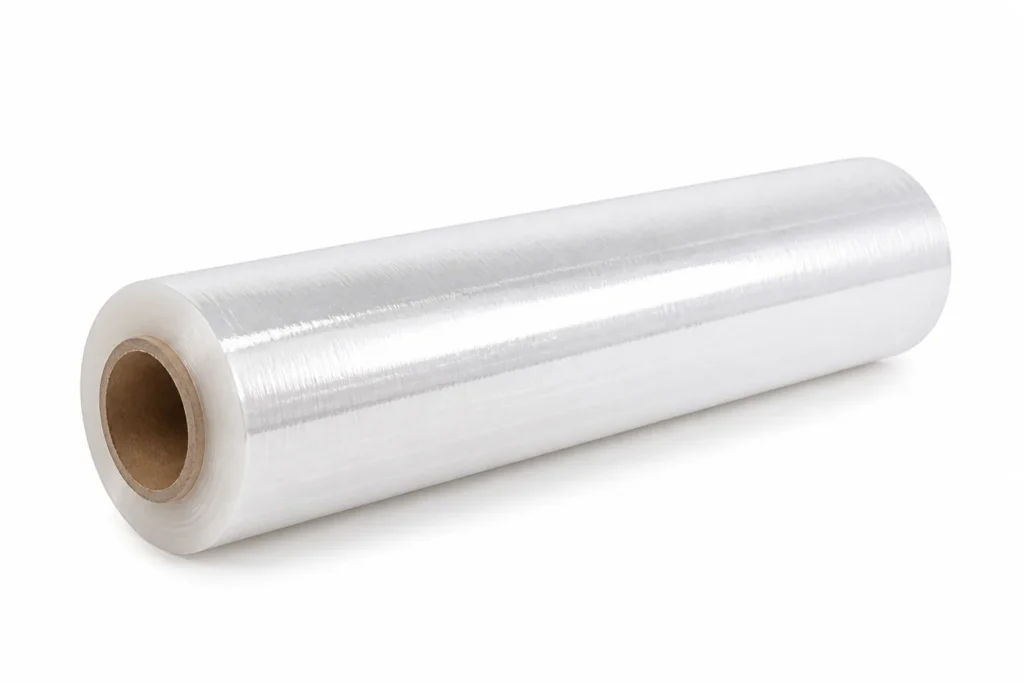
Stretch film specs are the numbers on a data sheet that describe thickness, width, length, core, strength, stretch and cling, and most buyers read only the first three. The rest explain why two rolls at the same micron behave differently. Understanding the full sheet turns a price comparison into a performance comparison. This guide helps buyers decide which stretch film specs matter for their loads and which are marketing noise.
1. What do the numbers on a stretch film specification mean?
Stretch film specs combine dimensional data, mechanical data and handling data. Dimensional values tell you what fits your machine: micron, width, length and core. Mechanical values tell you how the film behaves under force. Handling values describe cling and unwind. Read all three before comparing prices.
| Dimension | Impact | Buyer action / evidence |
|---|---|---|
| Dimensions | Machine fit | Core and width check |
| Mechanics | Load performance | Test data review |
| Handling | Operator experience | Sample trial |
2. How should a buyer read micron and gauge in stretch film specs?
Micron and gauge in stretch film specs describe thickness, with one mil equal to about 25.4 microns and 80 gauge equal to roughly 20 microns. The nominal figure is an average, so tolerance matters as much as the number. Two 20 micron films can differ by ten percent in real thickness. Ask for tolerance, not just nominal.
| Dimension | Impact | Buyer action / evidence |
|---|---|---|
| Nominal gauge | Mass and strength | Spec sheet check |
| Tolerance | Consistency | Written tolerance |
| Unit system | Order accuracy | Confirm micron |
3. What do width, length and core size mean in stretch film specs?
Width, length and core size in stretch film specs determine how the roll fits your equipment and how often you change rolls. Width must suit load height and overlap target, length drives change frequency, and core diameter must match the mandrel or dispenser. A cheap roll with the wrong core costs more in downtime. Measure before ordering.
| Dimension | Impact | Buyer action / evidence |
|---|---|---|
| Width | Coverage per turn | Load height data |
| Length | Change frequency | Consumption rate |
| Core | Equipment fit | Mandrel measurement |
4. How do tensile and elongation appear in stretch film specs?
Tensile and elongation in stretch film specs describe how much force the film carries and how far it stretches before breaking. High elongation allows high pre-stretch, which lowers kilos per pallet. High tensile strength supports containment on heavy loads. The two do not always rise together. Compare both values for your load type.
| Dimension | Impact | Buyer action / evidence |
|---|---|---|
| Tensile strength | Containment force | Test report |
| Elongation | Pre-stretch potential | Elongation data |
| Balance | Application fit | Grade comparison |
5. What do dart impact and tear values mean in stretch film specs?
Dart impact and tear values in stretch film specs predict how the film behaves against sharp points and how a tear propagates once started. High dart impact suits loads with corners and fixings. High tear resistance in both directions limits catastrophic failure. These values separate cast from blown more clearly than gauge does.
| Dimension | Impact | Buyer action / evidence |
|---|---|---|
| Dart impact | Puncture resistance | Impact data |
| Tear resistance | Failure severity | Tear data |
| Structure | Value pattern | Cast versus blown |
6. How does cling appear in stretch film specs?
Cling in stretch film specs is often described only as one-sided or two-sided rather than as a measured value. That is a gap, because cling strength changes with additive level and temperature. Ask the supplier to state the configuration and the intended application temperature. Test on a real pallet.
| Dimension | Impact | Buyer action / evidence |
|---|---|---|
| Cling side | Machine compatibility | Written declaration |
| Additive level | Tail security | Peel test |
| Temperature range | Seasonal fit | Application data |
7. How should a buyer compare two stretch film specs?
Buyers should compare two stretch film specs by lining up micron and tolerance, width, length, core, tensile, elongation, impact and tear in one table, then calculating delivered square metres and cost per pallet. A lower price often hides a shorter roll or wider tolerance. Compare like with like. Ask for test methods alongside values.
| Dimension | Impact | Buyer action / evidence |
|---|---|---|
| Delivered area | True unit cost | Length times width |
| Tolerance | Real performance | Spec comparison |
| Test method | Comparable values | Method statement |
8. What should a buyer add to stretch film specs before ordering?
Before ordering, buyers should add their own requirements to the stretch film specs: application temperature, equipment type, load weight range, maximum pre-stretch and acceptable tolerance. Suppliers can meet a written brief far better than a vague request. Attach the brief to the purchase order. Review it when loads or machines change.
| Dimension | Impact | Buyer action / evidence |
|---|---|---|
| Application data | Correct grade | Written brief |
| Equipment | Compatibility | Machine specification |
| Tolerance | Acceptance criteria | PO clause |
Frequently Asked Questions
Q1. Which stretch film spec matters most?
In stretch film specs, micron and tolerance matter most for basic fit, while elongation and impact resistance explain performance differences. Start with dimensions, then compare mechanical values for your load type.
Q2. What does 80 gauge mean in stretch film?
Eighty gauge is an imperial thickness measure equal to roughly 20 microns. Confirm whether a supplier quotes gauge or micron before comparing prices.
Q3. Is higher elongation always better?
Higher elongation allows more pre-stretch and lower consumption, but only if impact and tear performance hold. Very high elongation with weak puncture resistance fails on rough loads.
Q4. Why do two films at the same micron perform differently?
They differ in resin, structure, tolerance and additives, all of which change strength and cling. Nominal thickness alone cannot explain performance.
Q5. Can RX Packaging provide full specs for both structures?
RX Packaging produces cast and blown stretch film and can supply grade-specific specifications plus samples, so buyers can compare values against their own load requirements.