
Strapping Heavy Loads: How Buyers Secure Dense Pallets
Strapping heavy loads requires PET band, wider strap, edge protection and enough tension to lock the stack without crushing it. Weight alone is not the whole story, because sharp edges, shifting centres of gravity and rough handling break bands that look strong on paper. PP rarely survives dense industrial loads. This guide helps buyers set strap count, choose the band and verify joint strength before shipping heavy pallets.
1. What makes strapping heavy loads different from carton work?
Strapping heavy loads differs because the band resists static weight and dynamic shock at once. A dense pallet concentrates force at edges and corners, and every lift or turn multiplies the effective load. Handling method matters as much as weight. Carton practice does not transfer to industrial freight.
Weigh the load and watch how it is lifted before choosing a band.
| Dimension | Impact | Buyer action / evidence |
|---|---|---|
| Load weight | Strength class | Weigh ten pallets |
| Handling | Adds shock load | Watch forklift lifts |
| Edge profile | Cuts the band | Photograph contact edges |
2. How does strapping heavy loads change strap count and width?
Strapping heavy loads changes both strap count and band width. Wider band spreads force over more surface and reduces cutting, while extra straps shorten the unsupported span on long pallets. Two narrow straps are not equal to one wide strap, because a wide band distributes stress rather than concentrating it.
Increase width before tension when a load starts to crush.
| Dimension | Impact | Buyer action / evidence |
|---|---|---|
| Band width | Contact area | Compare crush marks by width |
| Strap count | Containment on long pallets | Review length and weight |
| Spacing | Bulging between straps | Check gaps after transit |
3. Where does strapping heavy loads fail on dense pallets?
Strapping heavy loads usually fails at the seal, a sharp corner or the bottom edge under the pallet. Seals slip when tension is high and the joint is weak, corners cut when protectors are missing, and broken deck boards saw through the band from below. A photo log of failures points to the real cause.
Photograph the failure point before repairing any broken pallet.
| Dimension | Impact | Buyer action / evidence |
|---|---|---|
| Failure location | Reveals the true cause | Keep a photo log |
| Pallet condition | Damaged decks cut bands | Inspect pallets before strapping |
| Tension level | Crush or movement | Check tension with a gauge |
4. Which band and tool suits strapping heavy loads?
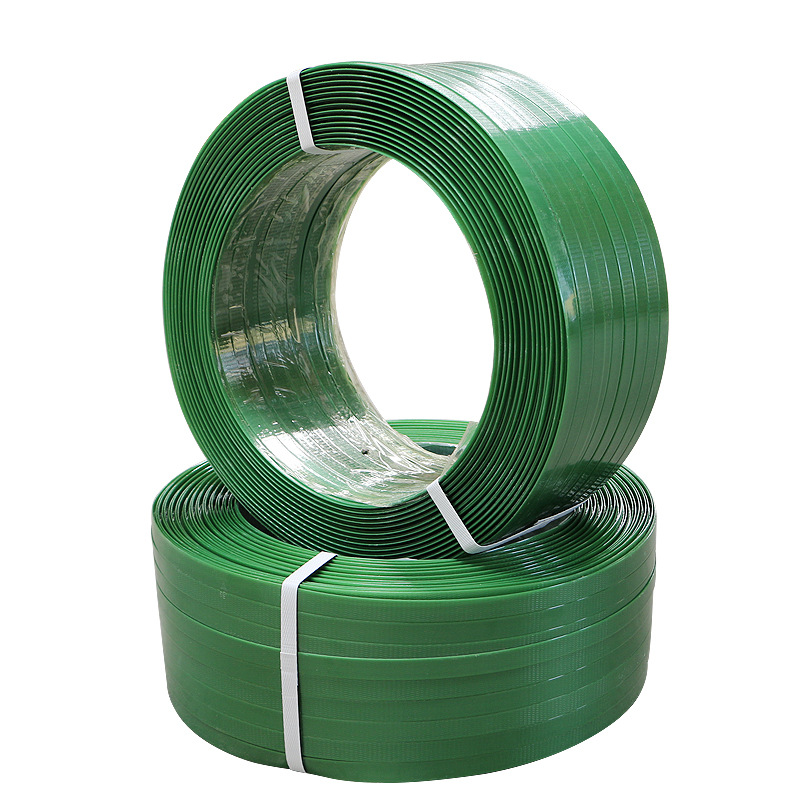
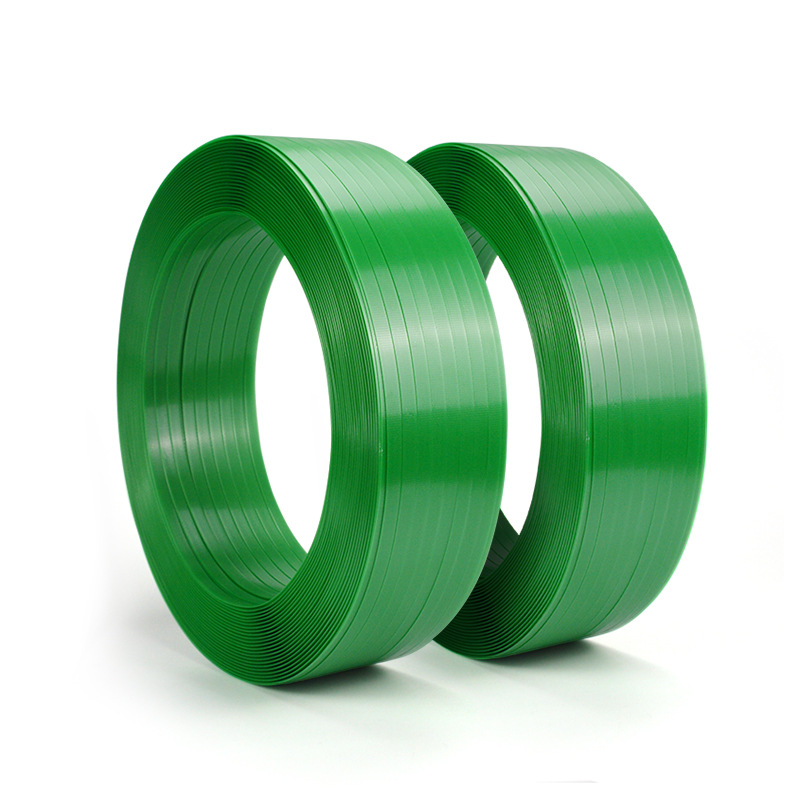
Strapping heavy loads points to PET with a heavy duty tensioner and a matched seal. PET holds high tension with low creep and tolerates shock better than a brittle alternative. PP is too elastic and relaxes under sustained weight. For very heavy or sharp loads, add protectors and step up band width.
Match the tool rating to the band width, then confirm the seal method.
| Dimension | Impact | Buyer action / evidence |
|---|---|---|
| Band material | Strength and creep | Trial PET on the heaviest SKU |
| Tool rating | Reaches working tension | Confirm rating for the width |
| Seal type | Caps loop strength | Pull-test production seals |
5. How should a buyer specify strapping heavy loads by product family?
Strapping heavy loads specifications should follow product families, not one factory standard. Bricks, coils, machinery and bagged goods present different edges and centres of gravity. Write a short spec per family covering band type, width, strap count, protection and tension setting, then train operators to follow it.
Write one spec sheet per product family and post it at the station.
| Dimension | Impact | Buyer action / evidence |
|---|---|---|
| Product family | Different failure risks | Group SKUs by shape |
| Pattern | Cross or vertical containment | Sketch the strap layout |
| Training | Operator drift | Audit strapped pallets weekly |
6. What should you check on a sample when strapping heavy loads?
Strapping heavy loads samples must be tested under real weight, not on a bench. Load a pallet to production weight, apply the intended pattern, then lift and turn it with a forklift. Check layer movement, carton marking and seal slip after handling. A static test still hides shock damage.
Test the sample through a full handling cycle, not just tensioning.
| Dimension | Impact | Buyer action / evidence |
|---|---|---|
| Test realism | Static tests hide shock | Run a loaded handling trial |
| Layer shift | Shows weak containment | Mark layers before testing |
| Seal inspection | Reveals joint quality | Cut and examine a tested seal |
7. How does pallet condition affect strapping heavy loads?
Strapping heavy loads depends on the pallet as much as the band. A broken deck board creates a sharp edge from below, and a warped pallet prevents even tension across the stack. Damaged pallets also flex under weight, which loosens straps after a few lifts. Inspect pallets as part of strapping.
Add a pallet check to the station and reject damaged units.
| Dimension | Impact | Buyer action / evidence |
|---|---|---|
| Pallet grade | Load rating and edges | Set a minimum grade |
| Moisture | Strength and corrosion | Reject wet or stained pallets |
| Repair policy | Repeat damage | Log rejects by supplier |
8. Should you use PP or PET band when strapping heavy loads?
Strapping heavy loads almost always means PET. PP stretches under sustained weight, so a dense pallet loosens within hours and layers begin to move. PET holds tension, resists creep and tolerates shock far better. PP suits only light loads or secondary straps on stabilised packs.
Choose PET whenever the load is dense, rigid or travels far.
| Dimension | Impact | Buyer action / evidence |
|---|---|---|
| Load density | Elastic bands relax | Compare retention on loaded pallets |
| Transit distance | Long routes need PET | Map route length by customer |
| Damage history | Confirms the polymer | Review claims by family |
Q1. How many straps does a heavy pallet need?
There is no universal number. Count depends on weight, pallet length and handling, so test patterns on real loads and add straps or width when layers move.
Q2. Can PP hold heavy loads if I use more straps?
Not reliably. Each PP strap still loses tension as the load settles, so extra straps add cost without solving relaxation. PET is the efficient answer.
Q3. Do heavy loads always need edge protectors?
Only where the band meets a sharp, thin or high-pressure edge. Protectors spread force and prevent cutting, which is cheaper than replacing split bands and damaged goods.
Q4. What tension should heavy load strapping use?
Enough to lock the stack without deforming it. Set tension by trial on the real product, verify with a gauge and audit weekly, because operators drift toward over-tensioning.
Q5. What should I request before ordering?
Request band samples in your widths, a loaded handling trial and seal strength data. RX Packaging supplies PP and PET band with tension and corrosion results from its 12-point quality check.