Stretch Film Recycling: Building a Workable Closed-Loop Programme
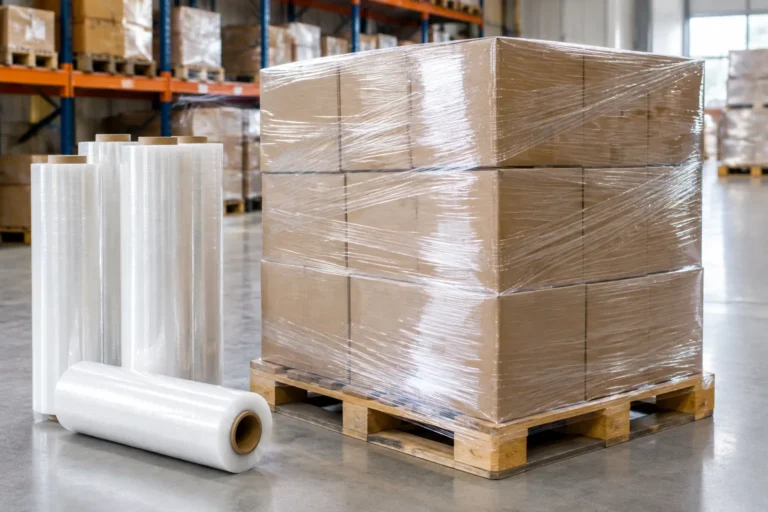
Stretch film recycling works because used film is clean, single-material polyethylene that recyclers can repelletise into new film, bags or moulded products. The barrier is rarely technology; it is collection discipline, contamination and bale density. A site that bales clean film can sell or reuse it, while a site that mixes film with tape pays for disposal. This guide helps buyers decide how to collect, compact and place stretch film so recycling becomes routine.
1. What makes stretch film recycling feasible?
Stretch film recycling is feasible when film is clean, dry, free of mixed materials and generated in enough volume to justify collection. Polyethylene film is easy to reprocess because it melts at low temperature and can be re-extruded repeatedly. Tape, labels and strapping destroy the value. Audit what actually lands in your film bin before designing a scheme.
| Dimension | Impact | Buyer action / evidence |
|---|---|---|
| Cleanliness | Recyclate value | Bin content audit |
| Contamination | Rejected loads | Contamination log |
| Volume | Collection economics | Monthly weight data |
2. How should stretch film recycling collection be set up?
Stretch film recycling collection should sit at the point of generation, because film removed at the pallet is more likely to be segregated than film carried across the warehouse. Place labelled bins beside each wrapping and unwrapping area. Size the opening for film only, so cartons and strapping cannot fit. Assign one person per shift to check the bins.
| Dimension | Impact | Buyer action / evidence |
|---|---|---|
| Bin location | Capture rate | Station layout |
| Opening size | Contamination control | Bin design check |
| Ownership | Sustained discipline | Named shift owner |
3. How does contamination affect stretch film recycling?
Contamination affects stretch film recycling by downgrading or rejecting the bale, because mixed materials clog shredders and contaminate the melt. Pressure-sensitive tape, paper labels, strapping and wood splinters are the usual culprits. One roll of tape can create defects across a whole batch of pellets. Train staff to strip tape before film goes in the bin.
| Dimension | Impact | Buyer action / evidence |
|---|---|---|
| Tape residue | Filter clogging | Pre-baling inspection |
| Paper labels | Recyclate quality | Label removal step |
| Mixed polymer | Batch rejection | Segregation training |
4. How should film be compacted for stretch film recycling?
Film should be compacted into dense bales or bags so transport cost per tonne stays reasonable, because loose film is mostly air. Small sites can use bags or boxes, while larger sites benefit from a dedicated film baler. Never compact film with cardboard, which is harder to separate and lowers value. Weigh each bale to track capture rate.
| Dimension | Impact | Buyer action / evidence |
|---|---|---|
| Density | Transport cost per tonne | Bale weight record |
| Separation | Recyclate grade | Material audit |
| Bale condition | Acceptance | Buyer inspection |
5. Where does stretch film recycling fit in a closed-loop arrangement?
Stretch film recycling fits a closed-loop arrangement when film returns to a converter who can use it in new products, closing the material cycle and often cutting disposal cost. Some buyers ask suppliers to take back used film with deliveries, solving transport in one movement. The loop only works if returned film meets the recycler’s specification. Agree take-back terms before building collection.
| Dimension | Impact | Buyer action / evidence |
|---|---|---|
| Backhaul | Lower transport cost | Delivery schedule fit |
| Specification | Acceptance certainty | Written agreement |
| End use | Credible claims | Recycler confirmation |
6. How does film thickness affect stretch film recycling?
Film thickness affects stretch film recycling through handling and density, because very thin film is light, flyaway and hard to capture efficiently. Thin film also carries proportionally more surface contamination per kilo. Thicker film is easier to capture but represents more material per pallet. The best answer is to use less film and capture what you use.
| Dimension | Impact | Buyer action / evidence |
|---|---|---|
| Gauge | Capture difficulty | Collection trial |
| Surface area | Contamination load | Wash requirement |
| Consumption | Total material flow | Usage versus recovery |
7. How should a buyer measure stretch film recycling performance?
Buyers should measure stretch film recycling performance with a simple ratio of kilos purchased against kilos recovered, reviewed monthly. That ratio exposes capture gaps far better than a sustainability statement. Add a contamination rate from bale inspections and a disposal cost line. Report the trend to operations, not only to sustainability staff.
| Dimension | Impact | Buyer action / evidence |
|---|---|---|
| Recovery ratio | Capture effectiveness | Monthly dashboard |
| Contamination rate | Bale value | Inspection sample |
| Cost per tonne | Programme viability | Finance review |
8. What should a buyer ask a supplier about stretch film recycling?
Before committing, buyers should ask a supplier what recyclate content their film can carry, whether they offer take-back, and how recycled content claims are verified. Vague statements about being eco-friendly are not evidence. Ask for the material specification and the destination of collected film. Write the arrangement into the supply agreement.
| Dimension | Impact | Buyer action / evidence |
|---|---|---|
| Recyclate content | Performance impact | Material specification |
| Take-back | Disposal cost | Contract clause |
| Verification | Credible reporting | Documentation review |
Frequently Asked Questions
Q1. Can stretch film be recycled with plastic bags?
Stretch film recycling usually collects film together with other polyethylene bags because they share one stream. Keep that stream free of rigid plastic and paper to protect bale grade.
Q2. Does dirty stretch film get recycled?
Heavily contaminated film is usually rejected or downcycled because cleaning costs exceed material value. Shake off debris, remove tape and keep bins covered so film stays dry.
Q3. Is recycled stretch film as strong as virgin film?
Recycled film can perform well, but repeated processing shortens polymer chains and reduces elongation. Many producers blend recyclate with virgin resin to balance performance and circularity.
Q4. How much stretch film does a warehouse generate?
Generation depends on pallet volume, gauge and pattern, so weigh bales over a month. That figure is the basis for any collection or take-back negotiation.
Q5. Can RX Packaging support a film take-back discussion?
RX Packaging supplies cast and blown stretch film and can discuss specification and collection logistics with buyers building a recycling programme, starting from sample rolls and usage data.