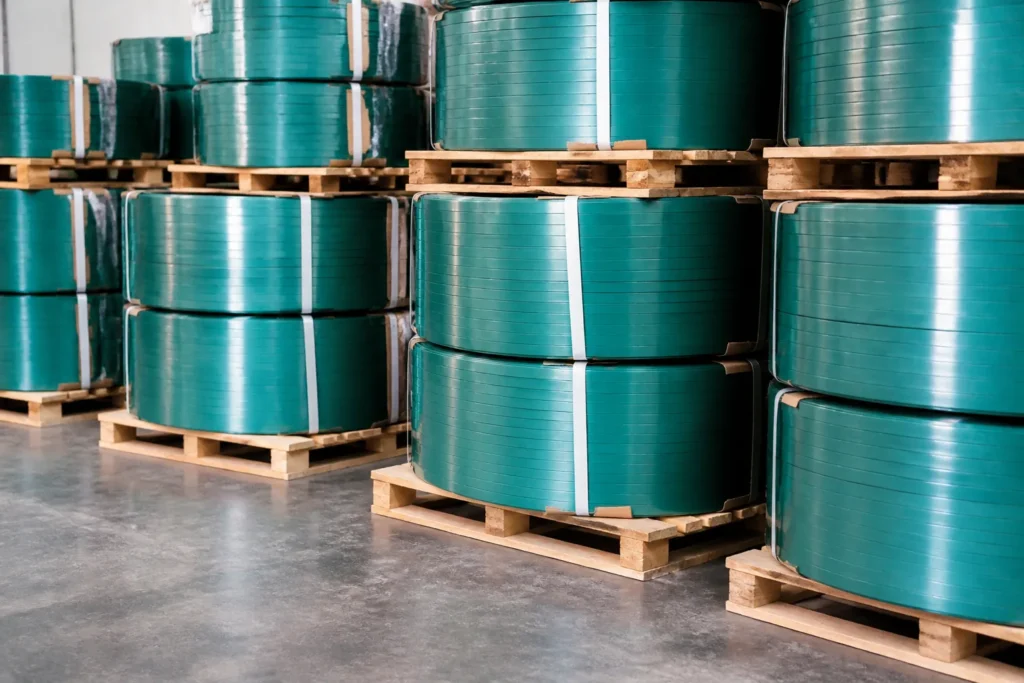
If you strap cartons, pallets, or bundles for shipping, you have two mainstream plastic strapping options: polypropylene (PP) and polyester (PET). They look similar on a roll, but they behave very differently under load.
The short answer: choose PP strapping for light-to-medium, short-haul bundling where cost matters most; choose PET strapping for heavy, high-value, or long-distance loads that need strength and tension retention.
What Is Plastic Strapping?
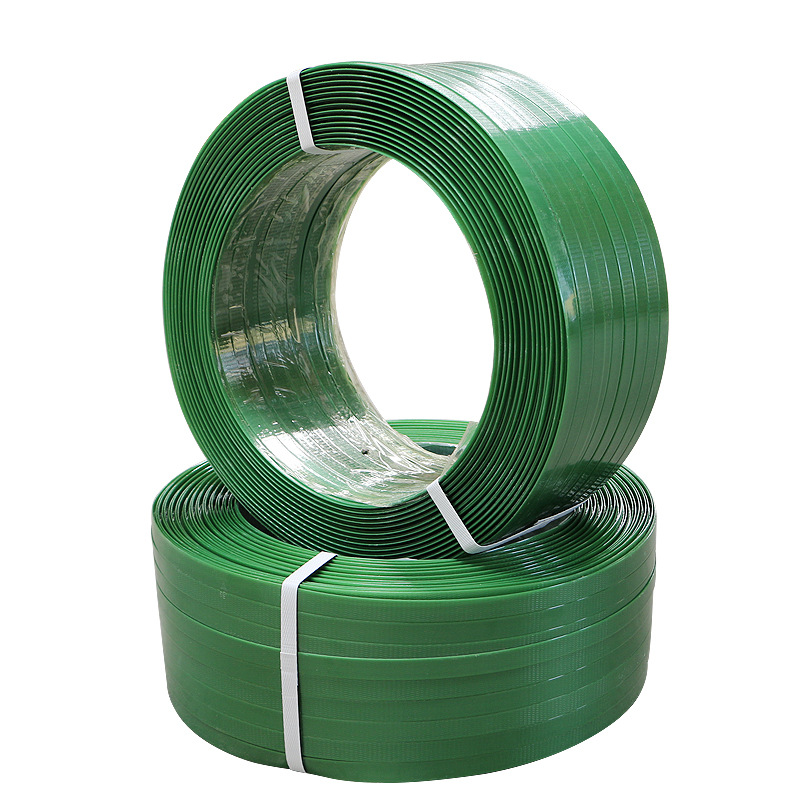
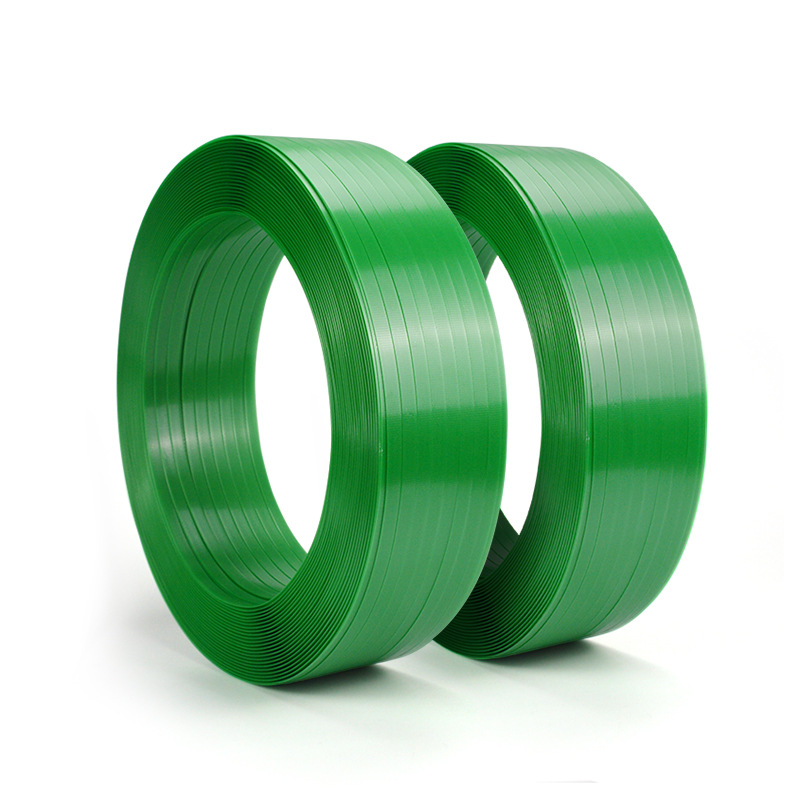
Plastic strapping — also called strapping band or banding — is a flat, high-tension ribbon used to secure cartons, pallets, and bundles during storage and transport. It is applied manually with a tensioner or automatically with a strapping machine, then sealed with a buckle, heat seal, or friction weld.
RX Packaging supplies both PP strapping band and PET strapping, in a range of widths, colors, and roll lengths for hand or machine application.
PP Strapping: Light, Economical, and Easy to Apply
Polypropylene strapping is the most widely used plastic strap. It is light, inexpensive, and easy to apply with basic tools, which makes it the default choice for a large share of everyday packaging operations.
When PP Strapping Makes Sense
- Light-to-medium weight cartons and bundles
- Short-haul or domestic shipments with limited handling
- High-volume operations where cost per strap is the priority
- Color-coded identification of product lines or destinations
PET Strapping: Strong, Elastic, and Built for Heavy Loads
Polyester strapping is engineered for strength. It stretches slightly under tension and recovers, holding heavy loads tightly through rough handling, temperature swings, and long transit times.
When PET Strapping Makes Sense
- Heavy cartons, pallets, and industrial loads
- Long-distance or export shipments with repeated handling
- Loads that settle or shift during transit
- Outdoor or high-humidity conditions where PP would relax
PP vs PET Strapping: At a Glance
| Factor | PP Strapping | PET Strapping |
|---|---|---|
| Material | Polypropylene | Polyester |
| Cost | Lower | Higher |
| Strength | Light-to-medium | High |
| Tension retention | Lower | Higher |
| Best for | Light, short-haul loads | Heavy, long-haul loads |
| Weather resistance | Lower | Higher |
How to Choose the Right Strapping
- Weigh your heaviest typical load
- Estimate handling intensity and transit distance
- Check your strapping tools — manual tensioner vs machine
- Decide whether color-coding or specific widths are required
PP vs PET Strapping: Frequently Asked Questions
What is the main difference between PP and PET strapping?
PP is cheaper and suited to light-to-medium loads, while PET is stronger, retains tension better, and handles heavy or long-haul loads.
Can I use PET strapping with hand tools?
Yes. PET strapping works with both manual tensioners and automatic strapping machines, though the heavier strap may require compatible tools.
Is PET strapping worth the extra cost?
For heavy or high-value loads, the extra cost is usually justified by fewer broken straps, better load containment, and less product damage in transit.
What colors are available for plastic strapping?
Plastic strapping is available in multiple colors, which is commonly used to identify product lines, routes, or ownership during handling.
Does RX Packaging supply strapping in custom widths?
Yes. RX Packaging offers PP and PET strapping in a range of widths and specifications, with support for hand and machine application.
Choosing the Right Supplier
Strapping quality has a direct impact on how well your loads arrive. Look for a manufacturer with consistent quality control and the ability to supply the exact width, color, and material you need. RX Packaging has manufactured packaging consumables since 2007, with PP and PET strapping among its core products, backed by SGS certification and a 12-point inspection process covering tension, corrosion resistance, and elasticity.
Need help selecting strapping for your operation? Contact RX Packaging for a recommendation and quote.
Bottom line: choose PP vs PET strapping by load weight and transit distance. Light cartons and short hauls favour PP; heavy pallets, long-distance shipping and high-tension loads favour PET. RX Packaging, a Foshan-based manufacturer since 2007, supplies both in virgin PP and PET with SGS-certified quality control, so you do not have to compromise.